 Skip to content

While outer elbow pain is widely known as tennis elbow, persistent pain on the inner side of the elbow is often caused by a condition known as golfer’s elbow. Medically referred to as medial epicondylitis, this condition is a painful, repetitive strain injury that affects the tendons connecting the forearm muscles to the inner elbow. Despite its name, golfer’s elbow is not limited to those who play golf; it regularly affects athletes, manual laborers, and office workers who perform repetitive gripping, wrist flexion, and hand-twisting movements.
If you are experiencing persistent inner elbow soreness, weakness in your grip, or difficulty lifting everyday objects, seeking specialized golfer’s elbow treatment in Varanasi is an important step toward recovery. Understanding the structural causes, diagnostic methods, and non-surgical treatments can help you protect your joints and regain full arm function.
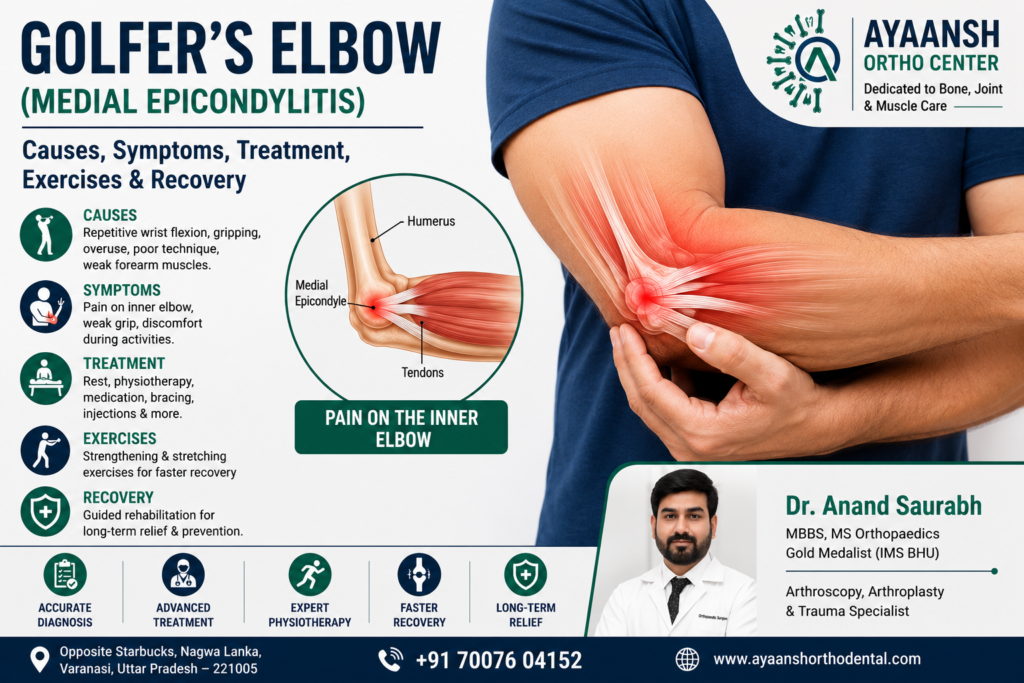
What is Golfer’s Elbow? Anatomy of the Medial Elbow
To understand medial epicondylitis, it is helpful to look at the anatomy of the inner elbow. The humerus (upper arm bone) has a prominent bony bump on its inner side near the joint, called the medial epicondyle.
This bony bump serves as the origin point for the common flexor tendon, which anchors a group of forearm muscles responsible for flexing the wrist and fingers, as well as pronating the forearm (turning the palm downward).
The Primary Muscles Involved:
- Pronator Teres: Helps rotate the forearm so the palm faces downward.
- Flexor Carpi Radialis (FCR): Flexes the wrist and abducts the hand.
- Palmaris Longus: Assists in weak wrist flexion and tenses the palmar fascia.
- Flexor Carpi Ulnaris (FCU): Flexes and adducts the wrist.
- Flexor Digitorum Superficialis (FDS): Flexes the middle phalanges of the fingers.
When these muscles are subjected to repetitive overload, microscopic tears develop in the common flexor tendon at its attachment to the medial epicondyle.
- Tendinitis vs. Tendinosis: In its early, acute stages, the condition may involve tendon inflammation (tendinitis). However, chronic cases typically involve tendinosis, a degenerative condition characterized by the breakdown of collagen fibers, disorganized tissue structure, and micro-tears without significant inflammatory cells. According to research published by the American Academy of Orthopaedic Surgeons (AAOS), treating chronic tendinosis requires therapies designed to stimulate tissue repair and collagen remodeling rather than simply suppressing inflammation.
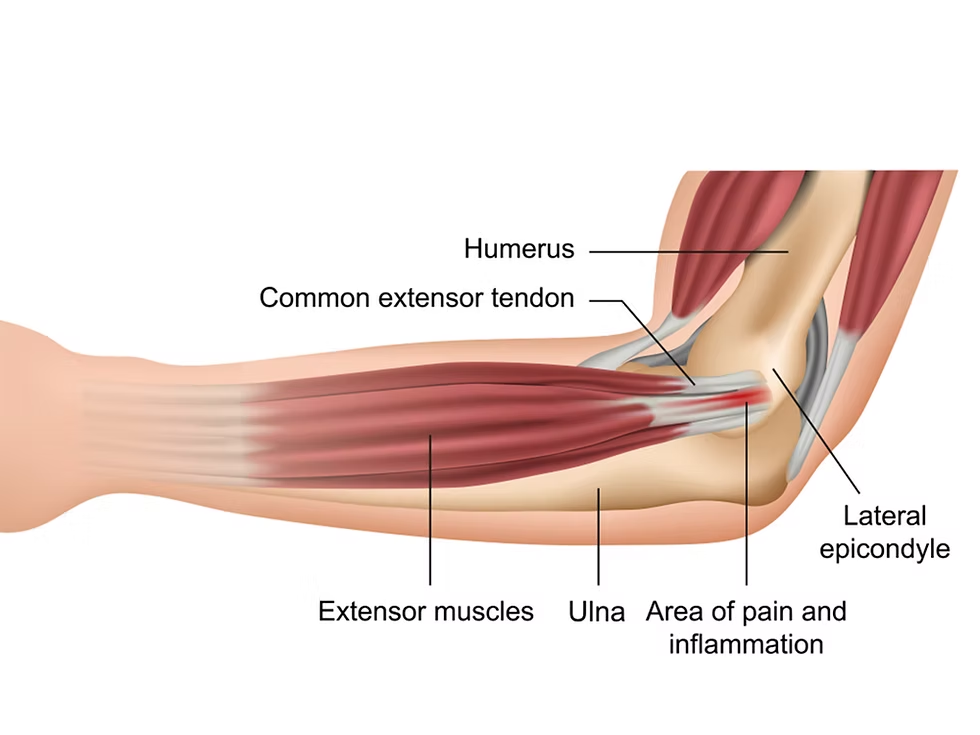
Causes and Common Risk Factors
Golfer’s elbow is primarily an overuse injury. It occurs when the forearm muscles are subjected to repetitive, forceful loads that exceed the tendon’s capacity to repair itself.
1. Sports-Related Activities
- Golf: A poor swing technique, hitting the ground instead of the ball, or over-gripping the club can place sudden, high-velocity tension on the inner elbow.
- Racket Sports: Utilizing heavy topspin during tennis serves, playing with a racket that is too heavy, or using an improper backhand technique can overload the medial tendons.
- Throwing Sports: Baseball pitchers (often referred to as “Little League Elbow” in younger athletes), javelin throwers, and football quarterbacks are prone to this injury due to the high valgus stress placed on the elbow during the throwing motion.
- Weightlifting: Improper lifting form during wrist curls, pull-ups, or bicep curls can strain the common flexor tendon.
2. Occupational Hazards
Many manual tasks involve repetitive wrist flexion and gripping, making certain professions highly vulnerable:
- Carpenters and Plumbers: Repetitive hammering, using screwdrivers, and cutting pipes.
- Painters and Decorators: Consistent brush or roller strokes.
- Assembly Line Workers: Repetitive hand movements, sorting, and manual packaging.
- IT Professionals and Typists: Prolonged keyboard and mouse use without proper ergonomic wrist support.
- Butchers and Chefs: Forceful chopping, slicing, and lifting heavy kitchenware.
3. Domestic and Daily Tasks
Simple household chores, if performed continuously without rest, can trigger medial epicondylitis:
- Carrying heavy grocery bags with a tight grip.
- Manual gardening, weeding, and using hand pruners.
- Wringing out wet laundry or scrubbing hard surfaces.
- Carrying a heavy laptop bag or suitcase by the handle for long distances.
4. Systemic Risk Factors
- Age: While it can affect anyone, golfer’s elbow is most common in individuals aged 35 to 55.
- Smoking: Tobacco use reduces microvascular blood flow, which is essential for repairing microscopic tendon tears.
- Obesity and Diabetes: Systemic metabolic conditions can impair collagen synthesis and decrease the tendon’s load-bearing capacity.

Recognizing the Symptoms of Golfer’s Elbow
The symptoms of golfer’s elbow typically develop on the inner side of the arm and can worsen with specific movements. Key symptoms include:
- Inner Elbow Pain and Tenderness: A localized ache or sharp pain directly on or just below the medial epicondyle.
- Stiffness: The elbow joint may feel stiff, and extending the arm fully can be painful.
- Weakness in the Hand and Wrist: You may notice a significant reduction in grip strength, making it difficult to hold a mug, turn a doorknob, or carry a bag.
- Numbness or Tingling: Because the ulnar nerve runs through the cubital tunnel directly behind the medial epicondyle, inflammation or swelling in this area can compress the nerve. This can cause a tingling sensation or numbness radiating down the forearm into the ring and pinky fingers.
If you also experience upper extremity pain, such as stiffness or pain in your shoulder, it is important to consult a specialist to determine if the issues are linked. You can read more about upper limb biomechanics in our article on Shoulder Impingement Syndrome.
Differential Diagnosis: Ruling Out Other Conditions
Because several structures pass through the medial side of the elbow, it is essential to distinguish golfer’s elbow from other conditions that cause inner arm pain:
- Cubital Tunnel Syndrome (Ulnar Nerve Compression): This condition occurs when the ulnar nerve is compressed behind the inner elbow. While golfer’s elbow causes localized tendon pain and muscle weakness, cubital tunnel syndrome is primarily characterized by burning pain, numbness, and tingling in the ring and little fingers.
- Ulnar Collateral Ligament (UCL) Injury: The UCL is the main stabilizing ligament on the inner side of the elbow. A UCL sprain or tear is common in throwing athletes and causes joint instability, clicking, and pain during throwing, which can be distinguished from tendon pain during physical exam maneuvers.
- Cervical Radiculopathy: A pinched nerve in the neck (C7 or C8 nerve roots) can cause referred pain to the inner elbow. If you also suffer from neck pain, read our comprehensive guide on Slip Disc Treatment or Sciatica Treatment to understand how spinal nerve compression can cause radiating pain.
- Osteoarthritis of the Elbow: Wear and tear of the joint cartilage can cause deep joint pain, clicking, and a loss of motion, which can be confirmed with basic imaging.

How is Golfer’s Elbow Diagnosed?
A thorough clinical evaluation by an orthopedic specialist is the key to an accurate diagnosis. The examination typically includes:
- Palpation: Checking for localized tenderness directly on the medial epicondyle.
- Resisted Wrist Flexion Test: The doctor applies downward pressure on your hand while you attempt to flex your wrist upward with your palm facing up. Pain at the inner elbow indicates a positive result.
- Resisted Forearm Pronation Test: The doctor resists your attempt to turn your palm downward, which tests the pronator teres muscle.
Diagnostic Imaging:
- X-rays: Used to rule out bone spurs, calcific tendinitis (where calcium deposits form within the tendon), or joint arthritis.
- Musculoskeletal Ultrasound: Provides a dynamic, high-resolution view of the common flexor tendon, allowing the specialist to check for thickening, fluid collection, or partial tears.
- MRI (Magnetic Resonance Imaging): Typically recommended for chronic, non-responsive cases to assess the extent of tendon degeneration, rule out a complete tendon tear, or evaluate the adjacent ulnar collateral ligament and ulnar nerve.
Non-Surgical Treatment Options
Most cases of golfer’s elbow respond well to conservative treatment. A structured, progressive recovery plan is designed to control pain, promote tissue repair, and rebuild strength.
1. The Protection and Pain Management Phase
- Activity Modification: Avoid activities that require forceful gripping, repetitive wrist flexion, or twisting.
- Ice Therapy (Cryotherapy): Apply an ice pack wrapped in a cloth to the inner elbow for 15 minutes, 3 to 4 times a day, to help manage acute pain.
- Over-the-Counter Medications: Short-term use of oral NSAIDs or topical anti-inflammatory gels can help manage acute discomfort.
- Counterforce Bracing: Wearing a golfer’s elbow strap about 2 inches below the inner elbow joint can help redistribute physical forces away from the injured tendon attachment.
2. Advanced Regenerative Treatments
For chronic cases that do not respond to standard rest and medication, advanced regenerative options can help stimulate natural tissue healing:
- Platelet-Rich Plasma (PRP) Therapy: This treatment involves drawing a small sample of your blood, spinning it to concentrate the platelets and growth factors, and injecting it directly into the damaged tendon under ultrasound guidance. Clinical studies hosted by the Mayo Clinic show that PRP can help promote tissue repair and collagen synthesis in chronic tendinopathy.
- Extracorporeal Shockwave Therapy (ESWT): This non-invasive treatment delivers acoustic shockwaves to the injured inner elbow. The shockwaves stimulate blood circulation, break down scar tissue, and trigger the body’s natural healing response.
3. Injections
- Corticosteroid Injections: Can provide rapid, temporary pain relief for severe discomfort, making it easier to participate in physical therapy. However, repeated steroid injections are avoided because they can weaken the tendon’s collagen structure and increase the risk of tendon tears over time.

Physical Therapy and Rehabilitation Exercises
Once your acute pain has subsided, a structured physical therapy program is essential to rebuild tendon strength and flexibility. Please consult an orthopedic surgeon or physical therapist before starting these exercises.
- Wrist Flexor Stretch: Extend your arm straight in front of you with your palm facing up. Use your other hand to gently pull your hand and fingers downward toward the floor until you feel a gentle stretch along your inner forearm. Hold for 20 to 30 seconds. Repeat 3 times.
- Wrist Extensor Stretch: Extend your arm with your palm facing down. Use your opposite hand to pull your wrist downward. Hold for 20 to 30 seconds. Repeat 3 times.
- Isometric Wrist Flexion: Sit down and rest your forearm on a table with your palm facing up. Place your opposite hand on top of your palm. Attempt to flex your wrist upward while resisting the movement with your other hand, keeping your wrist static. Hold the contraction for 10 seconds. Repeat 10 times.
- Eccentric Wrist Flexion (The Gold Standard): Rest your forearm on a table with your wrist hanging over the edge, holding a light dumbbell (0.5 to 1 kg) with your palm facing up. Use your healthy hand to lift the weight up (concentric phase). Then, remove your healthy hand and slowly lower the weight using only your injured arm over a count of 4 to 5 seconds (eccentric phase). Complete 3 sets of 10 to 15 repetitions daily.
- Stress Ball Squeezes: Hold a soft foam ball or therapy putty in your hand. Squeeze firmly for 5 seconds, then relax. Repeat 15 times to help rebuild grip strength.
Prevention and Ergonomic Tips
Preventing golfer’s elbow involves managing cumulative stress on the forearm flexors and modifying daily habits:
- Lift with Proper Form: When lifting objects, keep your wrists straight and rigid. Use your larger arm and shoulder muscles to lift, rather than relying solely on your wrists.
- Optimize Your Grip: Avoid holding tools, sports equipment, or steering wheels too tightly. Relax your grip whenever possible to reduce the constant strain on your forearm tendons.
- Ergonomic Workstation Setup: Adjust your keyboard and mouse so your forearms rest parallel to the floor, keeping your wrists in a neutral, relaxed position.
- Warm-up Before Activity: Before playing sports or starting physical labor, perform gentle forearm stretches and range-of-motion exercises to prepare your muscles and tendons for the workload.
- Address Other Kinetic Chain Issues: If you have a history of Back Pain or shoulder issues, treating these conditions can improve your overall movement mechanics and prevent your body from overcompensating with your forearms.
Surgical Interventions: When is Surgery Needed?
Surgery is rarely required for golfer’s elbow and is typically considered only if comprehensive non-surgical treatments fail to provide relief after 6 to 12 months.
Surgical Approaches:
- Medial Epicondyle Debridement (Open or Arthroscopic): The surgeon makes a small incision over the inner elbow, identifies the degenerated portion of the common flexor tendon, removes the damaged tissue, and repairs any micro-tears. The healthy tendon is then reattached to the bone.
- Ulnar Nerve Transposition: If the patient also has severe ulnar nerve compression (cubital tunnel syndrome), the surgeon may gently move the ulnar nerve from its position behind the medial epicondyle to the front of the joint to relieve pressure.
Post-Operative Rehabilitation:
- Weeks 1–2: The arm is supported in a splint or sling to protect the repaired tendon while allowing gentle finger movements.
- Weeks 3–6: The splint is removed, and progressive active-assisted range-of-motion exercises are started under physical therapy supervision.
- Months 2–4: Progressive strengthening exercises are introduced, starting with isometrics and advancing to eccentric loading.
- Months 4–6: Gradual return to sports, throwing activities, and heavy manual labor, depending on tendon healing and muscle strength.

Expert Care for Golfer’s Elbow in Varanasi at Ayaansh Ortho Center
If you are struggling with persistent inner elbow pain that is affecting your daily life, the team at Ayaansh Ortho Center can help. Located opposite Starbucks, Nagwa Lanka, Varanasi, our center provides comprehensive diagnostic and treatment services for sports injuries, tendon disorders, joint pain, arthritis, and fractures.
Our orthopedic services are led by Dr. Anand Saurabh (MBBS, MS Orthopaedics), a Gold Medalist from IMS BHU with over 10 years of clinical experience. Dr. Anand Saurabh specializes in arthroscopy, joint reconstruction, advanced trauma care, and evidence-based regenerative medicine (such as ultrasound-guided PRP injections). At Ayaansh Ortho Center, we focus on providing personalized, non-surgical and surgical care to help relieve your pain, restore mobility, and improve your long-term quality of life.
Do not let chronic elbow pain limit your daily activities. If you are experiencing joint pain, sports injuries, or need to consult on a complex orthopedic issue, Contact us today to schedule your consultation.
