 Skip to content

Frozen shoulder, medically known as adhesive capsulitis, is a painful condition that causes stiffness and progressive loss of movement in the shoulder joint. If you are searching for frozen shoulder treatment in Varanasi, understanding the condition early can help prevent long-term disability and restore normal shoulder function.
Unlike a simple muscle strain, frozen shoulder develops gradually over several months. The capsule surrounding the shoulder joint becomes inflamed, thickened, and tight, restricting movement and causing persistent pain. Many people initially ignore the symptoms, believing they will improve on their own, but delayed treatment can prolong recovery for months or even years.
Although frozen shoulder most commonly affects adults between the ages of 40 and 60 years, it can occur after shoulder injuries, surgery, prolonged immobilization, or certain medical conditions such as diabetes. With timely diagnosis, physiotherapy, medications, and specialized orthopedic care, most patients regain significant shoulder function and experience substantial pain relief.
In this comprehensive guide, you’ll learn everything about frozen shoulder, including its causes, symptoms, stages, diagnosis, treatment options, exercises, recovery timeline, and when to consult an orthopedic specialist.
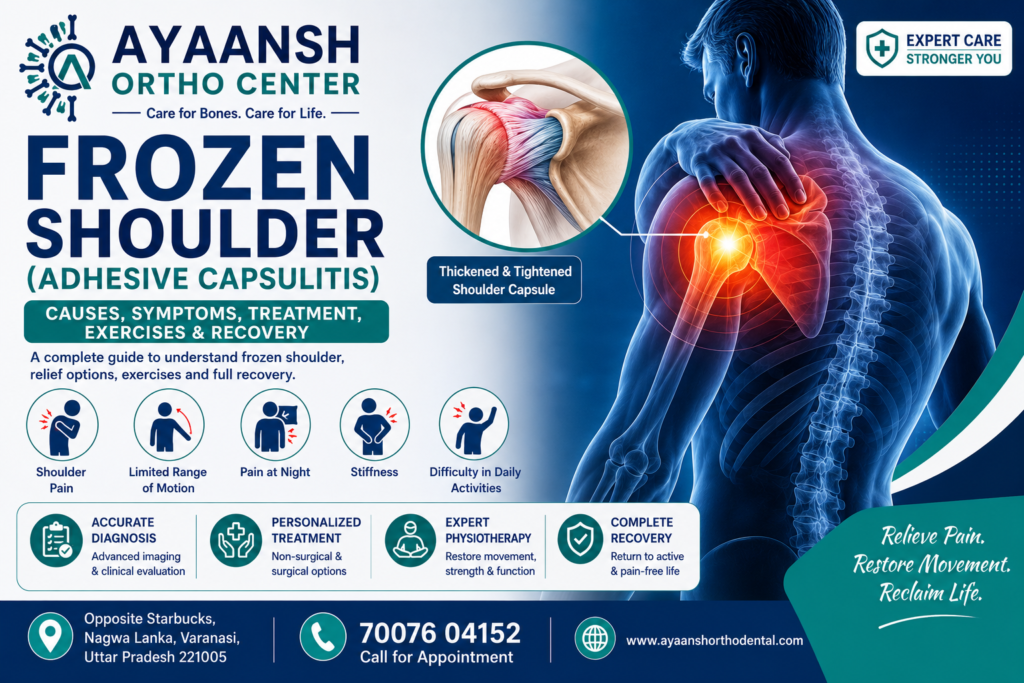
What Is Frozen Shoulder?
Frozen shoulder, or adhesive capsulitis, is a condition in which the connective tissue surrounding the shoulder joint becomes inflamed and progressively stiff.
Normally, the shoulder joint has a flexible capsule that allows movement in almost every direction. In frozen shoulder, this capsule thickens and tightens, reducing the available space inside the joint. As a result, shoulder movements become increasingly painful and restricted.
Unlike arthritis, frozen shoulder primarily affects the joint capsule, not the bones or cartilage.
Without appropriate treatment, the condition may take one to three years to resolve completely.
Understanding the Shoulder Joint
The shoulder is one of the most mobile joints in the human body.
It consists of:
- Humerus (upper arm bone)
- Scapula (shoulder blade)
- Clavicle (collarbone)
- Rotator cuff muscles
- Tendons
- Ligaments
- Joint capsule
- Synovial fluid
These structures work together to allow:
- Lifting the arm
- Reaching overhead
- Rotating the shoulder
- Throwing
- Pushing and pulling
- Performing daily activities comfortably
When the joint capsule becomes inflamed and contracts, these movements become increasingly difficult.

Causes of Frozen Shoulder
The exact cause of frozen shoulder is not always known. However, several factors increase the likelihood of developing this condition.
Prolonged Shoulder Immobilization
Keeping the shoulder immobile after a fracture, surgery, or injury can lead to tightening of the joint capsule.
Diabetes
People with diabetes are significantly more likely to develop frozen shoulder, although the exact reason remains unclear.
Shoulder Injury
Previous injuries involving the shoulder may trigger inflammation that eventually progresses to adhesive capsulitis.
Shoulder Surgery
Recovery after shoulder surgery sometimes requires temporary immobilization, increasing the risk of stiffness.
Thyroid Disorders
Both hypothyroidism and hyperthyroidism have been associated with an increased risk of frozen shoulder.
Parkinson’s Disease
Neurological disorders that reduce normal shoulder movement may contribute to joint stiffness.
Cardiovascular Disease
Some studies suggest an association between frozen shoulder and certain heart conditions.
Risk Factors
Your risk of developing frozen shoulder increases if you have:
- Age between 40 and 60 years
- Diabetes
- Previous shoulder injury
- Recent shoulder surgery
- Stroke
- Parkinson’s disease
- Thyroid disorders
- Long periods of shoulder immobilization
- Female gender (slightly higher incidence)
Recognizing these risk factors allows earlier diagnosis and treatment.

Symptoms of Frozen Shoulder
Symptoms usually develop slowly and worsen over time.
Common symptoms include:
- Persistent shoulder pain
- Shoulder stiffness
- Difficulty raising the arm
- Pain while sleeping on the affected side
- Difficulty combing hair
- Difficulty wearing clothes
- Pain while reaching overhead
- Reduced range of motion
- Difficulty reaching behind the back
- Pain during daily activities
Many patients notice that the pain is worse at night, making it difficult to sleep comfortably.
Stages of Frozen Shoulder
Frozen shoulder typically progresses through three stages.
Stage 1 – Freezing Stage
Duration: 2–9 months
During this stage:
- Shoulder pain gradually increases.
- Movement becomes progressively restricted.
- Night pain becomes common.
- Daily activities become uncomfortable.
Stage 2 – Frozen Stage
Duration: 4–12 months
Pain may begin to decrease slightly, but stiffness becomes much more noticeable.
Patients often experience:
- Significant loss of shoulder movement
- Difficulty dressing
- Difficulty driving
- Limited overhead activities
- Muscle weakness due to reduced use
Stage 3 – Thawing Stage
Duration: 6–24 months
This is the recovery phase.
During this stage:
- Shoulder movement gradually improves.
- Pain decreases.
- Daily function returns.
- Flexibility slowly increases with physiotherapy and exercise.
Recovery varies among individuals, but consistent rehabilitation plays an important role.
When Should You See an Orthopedic Doctor?
Consult an orthopedic specialist if you experience:
- Shoulder pain lasting longer than two weeks
- Difficulty lifting your arm
- Persistent shoulder stiffness
- Night pain affecting sleep
- Reduced shoulder movement
- Difficulty performing daily activities
- Pain following a shoulder injury
- No improvement with rest or home care
Early treatment can shorten recovery and reduce the risk of permanent stiffness.

Conditions That Can Mimic Frozen Shoulder
Not all shoulder pain is caused by frozen shoulder. Several other orthopedic conditions can produce similar symptoms.
Pain radiating from the neck due to Cervical Spondylosis may spread into the shoulder and arm, sometimes resembling frozen shoulder.
Similarly, patients with chronic Back Pain often develop poor posture, which can contribute to shoulder discomfort and reduced mobility.
In some cases, nerve irritation caused by a Slip Disc (Herniated Disc) may produce pain radiating into the shoulder or upper limb, depending on the affected spinal level.
Although uncommon, patients with Sciatica may alter their posture due to pain, indirectly affecting shoulder mechanics over time.
An accurate orthopedic evaluation helps distinguish frozen shoulder from these and other conditions, ensuring that you receive the most appropriate treatment.
Diagnosis of Frozen Shoulder
Diagnosing frozen shoulder begins with a detailed medical history and physical examination.
Your orthopedic specialist will evaluate:
- Shoulder pain characteristics
- Active and passive range of motion
- Muscle strength
- Previous injuries or surgeries
- Medical conditions such as diabetes or thyroid disorders
To confirm the diagnosis and rule out other shoulder problems, additional investigations may include:
- Digital X-rays
- MRI Scan (if rotator cuff injury or other soft tissue conditions are suspected)
- Ultrasound in selected cases
These tests help exclude fractures, arthritis, tendon injuries, or other causes of shoulder pain.
Frozen Shoulder Treatment in Varanasi
Treatment depends on the stage of the condition, symptom severity, and the patient’s overall health. The main goals are to reduce pain, restore movement, improve shoulder function, and prevent long-term stiffness.
Medications
Pain-relieving and anti-inflammatory medications may be prescribed to reduce discomfort and allow more effective participation in physiotherapy. These should always be taken under the guidance of your orthopedic specialist.
Physiotherapy
Physiotherapy is the cornerstone of frozen shoulder treatment.
A structured rehabilitation program focuses on:
- Improving shoulder mobility
- Stretching the tight joint capsule
- Restoring range of motion
- Strengthening surrounding muscles
- Reducing stiffness
- Improving functional movement
Consistency with supervised exercises and home exercise programs is essential for successful recovery.
Lifestyle Modifications
Simple changes in daily activities can reduce pain and support recovery.
These include:
- Avoiding prolonged shoulder immobilization
- Maintaining good posture
- Performing prescribed stretching exercises regularly
- Using the shoulder within pain-free limits
- Applying heat before exercises if recommended
- Avoiding sudden, forceful shoulder movements

Advanced Treatment Options for Frozen Shoulder
If conservative treatment does not provide adequate relief, your orthopedic specialist may recommend advanced treatment options depending on the stage of frozen shoulder, the severity of stiffness, and your overall health.
Corticosteroid Injections
For patients experiencing significant pain during the early “freezing” stage, corticosteroid injections into the shoulder joint may help reduce inflammation and improve comfort. These injections are typically used alongside physiotherapy rather than as a standalone treatment.
Hydrodilatation (Capsular Distension)
In selected cases, hydrodilatation may be recommended. This procedure involves injecting sterile fluid into the shoulder joint capsule to gently stretch it and improve movement. It is generally considered when symptoms persist despite medications and physiotherapy.
Manipulation Under Anesthesia (MUA)
If shoulder stiffness remains severe after several months of non-surgical treatment, manipulation under anesthesia may be considered. During this procedure, the shoulder is carefully moved while the patient is under anesthesia to improve joint mobility.
Arthroscopic Capsular Release
Patients with persistent stiffness that does not respond to conservative treatment may benefit from arthroscopic surgery. During this minimally invasive procedure, the tightened portions of the shoulder capsule are carefully released to restore movement.
Surgery is reserved for carefully selected patients and is usually followed by an intensive physiotherapy program to maintain the regained range of motion.
Recovery After Frozen Shoulder Treatment
Recovery varies depending on the stage of the condition and the chosen treatment approach.
Conservative Treatment
Many patients gradually improve with medications, physiotherapy, and regular stretching exercises.
A typical recovery timeline is:
| Recovery Stage | Approximate Duration |
|---|---|
| Pain Reduction | 2–6 weeks |
| Improved Mobility | 6–12 weeks |
| Significant Functional Improvement | 3–6 months |
| Near Complete Recovery | 12–24 months |
Some patients recover sooner, while others require a longer rehabilitation period.
Recovery After Arthroscopic Surgery
Patients undergoing arthroscopic capsular release generally experience:
- Gentle movement exercises beginning within a few days.
- Physiotherapy starting soon after surgery.
- Progressive improvement in shoulder movement over several weeks.
- Return to most routine activities within 2–3 months.
- Continued improvement for up to one year.
Following the prescribed rehabilitation program is essential for achieving the best possible outcome.
Best Exercises for Frozen Shoulder
Exercise plays a crucial role in improving flexibility and restoring shoulder function.
Commonly recommended exercises include:
- Pendulum Exercise
- Finger Walk on the Wall
- Cross-Body Stretch
- Towel Stretch
- External Rotation Stretch
- Internal Rotation Stretch
- Shoulder Flexion Stretch
- Passive Shoulder Elevation
- Doorway Stretch
- Scapular Retraction Exercise
These exercises should be performed only after evaluation by an orthopedic specialist or physiotherapist to avoid worsening symptoms.
Activities to Avoid
During recovery, avoid activities that increase shoulder pain or strain the joint excessively.
These include:
- Heavy overhead lifting
- Sudden jerking movements
- Throwing sports
- Lifting heavy objects above shoulder level
- Sleeping directly on the affected shoulder
- Forcefully stretching beyond pain limits
- Ignoring persistent pain
Protecting the shoulder while maintaining gentle movement helps support recovery.

Lifestyle Tips for Faster Recovery
Several healthy habits can improve recovery and reduce stiffness.
These include:
- Perform physiotherapy exercises regularly.
- Avoid prolonged shoulder immobilization.
- Maintain good posture while sitting and working.
- Stay physically active within comfortable limits.
- Follow your doctor’s treatment plan.
- Control diabetes effectively if present.
- Maintain a balanced diet.
- Get adequate sleep.
- Attend regular follow-up appointments.
Consistency is often the key to successful recovery.
Can Frozen Shoulder Be Prevented?
Although not every case can be prevented, certain measures reduce the likelihood of developing adhesive capsulitis.
Preventive strategies include:
- Begin shoulder movement as soon as medically appropriate after injury or surgery.
- Perform rehabilitation exercises consistently.
- Manage diabetes effectively.
- Maintain good shoulder posture.
- Seek early treatment for persistent shoulder pain.
- Avoid unnecessary prolonged use of slings.
- Strengthen the shoulder muscles regularly.
Early intervention often prevents severe stiffness.
Common Myths About Frozen Shoulder
Myth: Frozen shoulder will improve on its own without treatment.
Fact: While many patients eventually recover, appropriate treatment usually shortens recovery and helps prevent prolonged disability.
Myth: Complete bed rest is the best treatment.
Fact: Gentle, guided shoulder movement is generally recommended. Prolonged immobilization often worsens stiffness.
Myth: Surgery is always required.
Fact: Most patients improve with medications, physiotherapy, and home exercises. Surgery is reserved for selected cases.
Myth: Once recovered, frozen shoulder always returns.
Fact: Most patients recover without recurrence in the same shoulder, although the opposite shoulder may occasionally be affected.
Myth: Shoulder pain always means frozen shoulder.
Fact: Shoulder pain can also result from rotator cuff injuries, arthritis, bursitis, tendon problems, or neck conditions.
Possible Complications
Without timely treatment, frozen shoulder may lead to:
- Long-term shoulder stiffness
- Persistent pain
- Difficulty performing daily activities
- Reduced shoulder strength
- Limited overhead movement
- Sleep disturbance
- Reduced quality of life
Early diagnosis and treatment significantly reduce the risk of these complications.
Frequently Asked Questions
How long does frozen shoulder last?
Recovery typically takes between one and three years, depending on severity and treatment.
Is frozen shoulder permanent?
No. Most patients gradually recover, although some may experience mild residual stiffness.
Can frozen shoulder affect both shoulders?
Yes. Some patients develop frozen shoulder in the opposite shoulder months or years later.
Is physiotherapy necessary?
Yes. Physiotherapy is one of the most important components of treatment and recovery.
Is frozen shoulder common in people with diabetes?
Yes. Diabetes significantly increases the risk of developing frozen shoulder.
Can exercise worsen frozen shoulder?
Appropriate exercises improve recovery. However, aggressive stretching without medical guidance may increase pain.
When is surgery recommended?
Surgery may be considered if symptoms persist despite several months of conservative treatment.
Which doctor should I consult?
An orthopedic specialist is the most appropriate doctor for diagnosing and treating frozen shoulder.
Can frozen shoulder come back?
Recurrence in the same shoulder is uncommon, although the opposite shoulder can occasionally be affected.
When should I seek immediate medical attention?
Seek prompt evaluation if shoulder pain follows a significant injury, is associated with deformity, severe weakness, fever, or inability to move the arm.

Expert Frozen Shoulder Care at Ayaansh Ortho Center
Persistent shoulder pain and stiffness can interfere with work, sleep, and everyday activities. Early diagnosis and appropriate treatment can help restore movement and improve quality of life.
At Ayaansh Ortho Center, patients receive comprehensive orthopedic evaluation and evidence-based treatment for frozen shoulder, sports injuries, fractures, arthritis, back pain, slipped discs, cervical spine disorders, and other musculoskeletal conditions.
Dr. Anand Saurabh (MBBS, MS Orthopaedics) is a Gold Medalist from IMS BHU with over 10 years of experience in orthopedics. His areas of expertise include arthroscopy, arthroplasty (joint replacement), trauma care, fracture management, and the treatment of shoulder, knee, hip, and spine conditions. Every patient receives an individualized treatment plan focused on long-term pain relief and functional recovery.
Related Articles
You may also find these orthopedic guides helpful:
- Cervical Spondylosis: Causes, Symptoms, Treatment & Prevention
- Back Pain: Causes, Symptoms, Treatment & When to See an Orthopedic Doctor
- Slip Disc (Herniated Disc): Causes, Symptoms, Treatment & Recovery
- Sciatica: Causes, Symptoms, Treatment, Exercises & Prevention
- Knee Pain: Causes, Symptoms, Treatment & Prevention
Trusted Medical Resources
For reliable, evidence-based information about frozen shoulder and other orthopedic conditions, visit:
- American Academy of Orthopaedic Surgeons (AAOS): https://orthoinfo.aaos.org/
- National Institute of Arthritis and Musculoskeletal and Skin Diseases (NIAMS): https://www.niams.nih.gov/
- MedlinePlus: https://medlineplus.gov/
Conclusion
Frozen shoulder is a treatable condition, but recovery requires patience, consistent rehabilitation, and timely orthopedic care. Early diagnosis, structured physiotherapy, and appropriate medical treatment can significantly reduce pain, improve shoulder mobility, and restore independence in daily activities.
If you are experiencing persistent shoulder pain or stiffness, seeking frozen shoulder treatment in Varanasi without delay can help prevent long-term complications and speed up recovery.
Book an Appointment
If you are looking for frozen shoulder treatment in Varanasi, schedule a consultation at Ayaansh Ortho Center. A comprehensive orthopedic evaluation and personalized treatment plan can help relieve pain, improve shoulder function, and get you back to your normal routine.
