 Skip to content

Introduction:
Back pain is one of the leading causes of discomfort, reduced mobility, and missed workdays worldwide. It affects people of all age groups, from students and office workers to athletes and senior citizens. While many episodes of back pain improve with rest and lifestyle modifications, persistent or severe pain may indicate an underlying spinal condition that requires expert evaluation. Early diagnosis and appropriate treatment can help relieve pain, restore mobility, and prevent long-term complications.
Whether your back pain started after lifting a heavy object, sitting for long hours, or developed gradually over time, understanding its cause is the first step toward effective treatment. This guide explains the symptoms, causes, diagnosis, treatment options, prevention strategies, and when you should consult an orthopedic specialist.
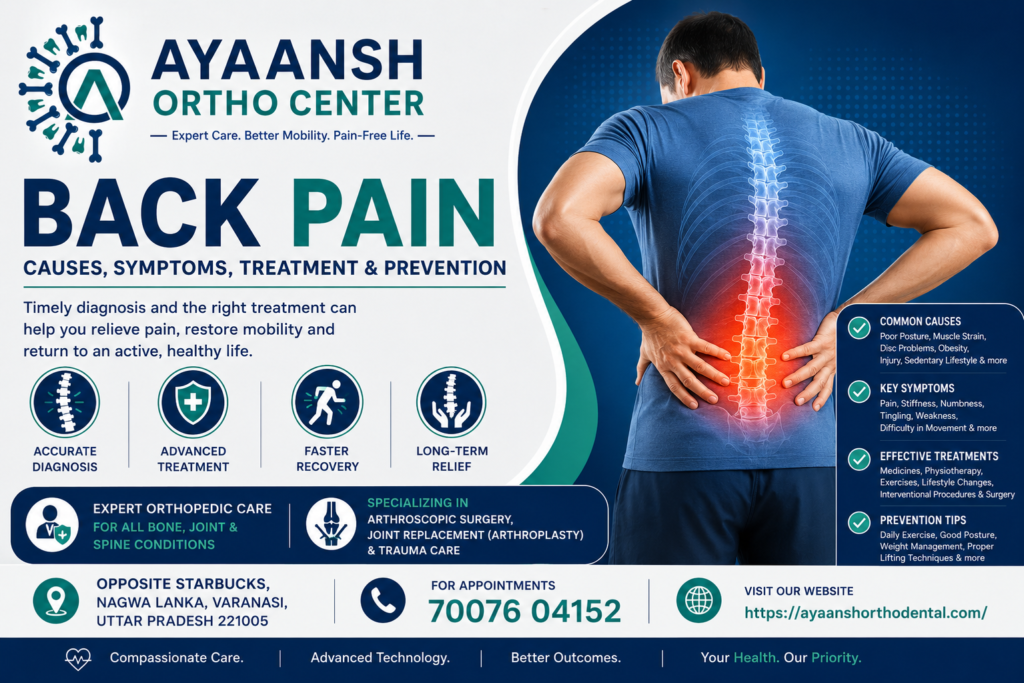
What Is Back Pain?
Back pain refers to discomfort that occurs anywhere along the spine, including the neck, upper back, middle back, or lower back. The lower back (lumbar spine) is the most commonly affected area because it supports much of the body’s weight and is involved in nearly every movement, including walking, bending, lifting, and twisting.
Back pain may be acute (lasting less than six weeks), subacute (lasting six to twelve weeks), or chronic (lasting more than three months). The pain may be mild and intermittent or severe enough to interfere with daily activities, sleep, and work.
Understanding the Spine:
The human spine is made up of 33 vertebrae, intervertebral discs, muscles, ligaments, nerves, and joints that work together to provide support, flexibility, and protection for the spinal cord. Healthy discs act as cushions between the bones, while surrounding muscles and ligaments stabilize the spine during movement.
Damage to any of these structures—whether due to injury, aging, poor posture, or disease—can result in back pain. Understanding which structure is involved is essential for selecting the most appropriate treatment.
Types of Back Pain:
- Acute back pain
- Chronic back pain
- Mechanical back pain
- Muscle strain
- Disc-related back pain
- Sciatica
- Degenerative spine disease
- Inflammatory back pain
Different types of back pain require different treatment approaches. While muscle strains often improve with conservative care, conditions such as slipped discs, spinal stenosis, or nerve compression may require advanced investigations and specialized orthopedic treatment.

Common Symptoms of Back Pain:
- Persistent pain in the lower, middle, or upper back
- Muscle stiffness and tightness
- Pain while bending or lifting
- Difficulty standing or walking for long periods
- Pain radiating into the buttocks or legs
- Tingling or numbness in the legs
- Muscle weakness
- Reduced flexibility
- Difficulty sleeping because of pain
- Pain that worsens after prolonged sitting
Common Causes of Back Pain:
Back pain is a symptom rather than a disease. It can develop due to problems involving the muscles, bones, joints, discs, nerves, or ligaments of the spine. Identifying the exact cause is essential because treatment varies depending on the underlying condition.
Some of the most common causes include:
- Muscle or ligament strain due to lifting heavy objects or sudden twisting movements.
- Poor posture while sitting, working on a computer, or using mobile devices for prolonged periods.
- Herniated (slipped) disc causing pressure on nearby nerves.
- Degenerative disc disease associated with aging.
- Osteoarthritis affecting the spine.
- Spinal stenosis (narrowing of the spinal canal).
- Osteoporosis leading to vertebral compression fractures.
- Sports injuries and road traffic accidents.
- Obesity causing excessive stress on the lower back.
- Infections, tumors, or inflammatory conditions (less common but important causes).

Risk Factors:
Certain factors increase the likelihood of developing back pain. While some, such as age, cannot be changed, many risk factors can be reduced through healthy lifestyle choices.
- Increasing age
- Sedentary lifestyle
- Poor posture
- Obesity
- Smoking
- Weak Core Muscles
- Repetitive lifting
- Physically demanding occupations
- Pregnancy
- Previous spinal injury
- Stress and anxiety
- Lack of regular exercise
When Back Pain Is a Medical Emergency:
Most cases of back pain improve with conservative treatment, but some symptoms require immediate medical attention. Seek urgent medical care if you experience:
- Sudden loss of bladder or bowel control.
- Severe weakness in one or both legs.
- Numbness around the groin or inner thighs.
- High fever along with severe back pain.
- Back pain following a major accident or fall.
- Unexplained weight loss with persistent back pain.
- Severe night pain that does not improve with rest.
These symptoms may indicate a serious spinal condition requiring immediate evaluation and treatment.
How Orthopedic Specialists Diagnose Back Pain:
Diagnosing back pain begins with a detailed discussion of your symptoms, medical history, occupation, lifestyle, and previous injuries. A physical examination helps assess posture, spinal alignment, muscle strength, reflexes, range of motion, and nerve function.
Depending on the suspected cause, your orthopedic specialist may recommend one or more investigations, including:
- Digital X-rays to evaluate bones and spinal alignment.
- MRI scans to assess discs, nerves, ligaments, and soft tissues.
- CT scans for complex fractures or detailed bone evaluation.
- Blood tests if infection or inflammatory arthritis is suspected.
- Bone density testing when osteoporosis is a concern.
An accurate diagnosis ensures that treatment targets the actual cause of pain rather than only masking symptoms.
Treatment Options for Back Pain:
Treatment depends on the severity, duration, and underlying cause of the condition. Most patients improve with non-surgical treatment, while selected cases may benefit from advanced orthopedic procedures.
Medications
Pain-relieving medicines, anti-inflammatory drugs, and muscle relaxants may reduce pain and inflammation. These medicines should only be taken under the guidance of a qualified medical professional.
Physiotherapy
Physiotherapy is one of the most effective treatments for many forms of back pain. It focuses on strengthening the muscles supporting the spine, improving flexibility, correcting posture, and restoring normal movement patterns. Regular physiotherapy also helps reduce the risk of future episodes.
Lifestyle Modifications
Small changes in daily habits can significantly reduce spinal stress. Maintaining a healthy weight, improving posture, taking breaks during prolonged sitting, sleeping on a supportive mattress, and performing regular stretching exercises all contribute to better spinal health.
Interventional Procedures
In selected cases, minimally invasive procedures such as image-guided injections may help reduce inflammation and provide temporary pain relief while rehabilitation continues.
Surgery
Surgery is considered only when conservative treatment fails or when significant nerve compression, spinal instability, fractures, or severe structural abnormalities are present. The choice of procedure depends on the specific spinal condition and the patient’s overall health.

Recovery and Rehabilitation:
Recovery from back pain depends on its underlying cause, severity, and how early treatment begins. While minor muscle strains often improve within a few weeks, chronic spinal conditions may require a longer rehabilitation program. Following your treatment plan consistently is one of the most important factors in achieving long-term relief.
A structured rehabilitation program usually includes:
- Guided physiotherapy sessions
- Posture correction
- Core strengthening exercises
- Flexibility training
- Activity modification
- Gradual return to work and sports
Avoid prolonged bed rest unless specifically advised by your doctor, as staying active within comfortable limits often promotes faster recovery.
Exercises That May Help Reduce Back Pain:
Gentle exercises improve flexibility, strengthen the muscles supporting the spine, and reduce stiffness. However, exercises should be performed only after an appropriate diagnosis, as certain spinal conditions may worsen with incorrect movements.
- Pelvic tilts
- Cat-Cow stretch
- Child’s Pose
- Knee-to-chest stretch
- Bird-Dog exercise
- Bridge exercise
- Walking
- Core strengthening exercises
Stop exercising immediately if pain suddenly worsens or if you develop numbness, weakness, or severe discomfort, and consult an orthopedic specialist.
How to Prevent Back Pain
- Maintain a healthy body weight.
- Exercise regularly.
- Strengthen your core muscles.
- Lift heavy objects correctly.
- Avoid prolonged sitting.
- Use an ergonomic workstation.
- Wear supportive footwear.
- Sleep on a supportive mattress.
- Stretch before physical activity.
- Quit smoking to improve spinal health.
Healthy daily habits play a major role in preventing both first-time and recurring episodes of back pain.

Common Myths About Back Pain
Myth: Complete bed rest is the best treatment
Fact: Prolonged bed rest may delay recovery. Gentle movement and medically supervised rehabilitation are usually more beneficial.
Myth: Only older people develop back pain.
Fact: Back pain can affect people of any age, including students, office workers, athletes, and young adults.
Myth: Surgery is always required.
Fact: Most patients improve with medications, physiotherapy, lifestyle changes, and exercise. Surgery is recommended only for carefully selected cases.
Myth: Pain always means serious spinal damage.
Fact: Many cases result from muscle strain or posture-related issues rather than severe structural problems.
Frequently Asked Questions
Can back pain heal on its own?
Mild muscle-related back pain often improves within a few weeks with rest, activity modification, and appropriate exercises. Persistent pain should be evaluated by an orthopedic specialist.
Which doctor should I consult for back pain?
An orthopedic specialist is well-equipped to diagnose and manage bone, joint, muscle, ligament, and many spine-related conditions causing back pain.
Is walking good for back pain?
For many people, gentle walking helps maintain mobility and reduce stiffness. However, if walking significantly increases pain or causes leg weakness, seek medical advice.
Can poor posture cause chronic back pain?
Yes. Sitting incorrectly for long hours or using poorly designed workstations can place excessive stress on the spine over time.
Is MRI necessary for every patient?
No. MRI is recommended only when clinically indicated, such as suspected nerve compression, persistent pain, or when surgery is being considered.
Can obesity increase back pain?
Yes. Excess body weight increases the mechanical load on the spine and can contribute to chronic back pain.
When should surgery be considered?
Surgery is considered only after careful evaluation when conservative treatment does not provide adequate relief or when there is significant nerve compression or spinal instability.

Expert Orthopedic Care at Ayaansh Ortho Clinic
If you are experiencing persistent back pain, numbness, weakness, or difficulty performing daily activities, timely evaluation by an orthopedic specialist is important. At Ayaansh Ortho Center, patients receive comprehensive assessment and evidence-based treatment for spine, bone, joint, and trauma-related conditions.
Dr. Anand Saurabh (MBBS, MS Orthopaedics) is a Gold Medalist from IMS BHU with over 10 years of experience in orthopedics. His areas of practice include arthroscopic surgery, joint replacement (arthroplasty), fracture management, trauma care, and the treatment of a wide range of orthopedic conditions. Every treatment plan is tailored to the patient’s diagnosis, symptoms, activity level, and long-term goals.
Conclusion
Back pain is one of the most common health concerns, but it should never be ignored if it persists, worsens, or affects your daily life. Early diagnosis, appropriate treatment, regular exercise, and healthy lifestyle habits can significantly improve recovery and reduce the risk of recurrence. If your symptoms continue despite home care, consult a qualified orthopedic specialist for a thorough evaluation and personalized treatment plan.
Book an Appointment
If you are looking for expert evaluation and treatment for back pain in Varanasi, schedule a consultation at Ayaansh Ortho Center. Early diagnosis and individualized orthopedic care can help relieve pain, restore mobility, and improve your quality of life.
