 Skip to content

Introduction
Neck pain is a common health concern that affects millions of people worldwide, particularly those who spend long hours working on computers, using smartphones, or performing repetitive neck movements. One of the leading causes of chronic neck pain is cervical spondylosis, an age-related condition that affects the bones, discs, and joints of the cervical spine (neck).
Although cervical spondylosis is more common after the age of 40, younger adults can also develop symptoms due to poor posture, prolonged screen time, sedentary lifestyles, or previous neck injuries. While many people experience only mild stiffness, others may develop severe pain, numbness, tingling, or weakness in the arms if nearby nerves become compressed.
This comprehensive guide explains the causes, symptoms, diagnosis, treatment options, prevention strategies, and when you should consult an orthopedic specialist for cervical spondylosis.
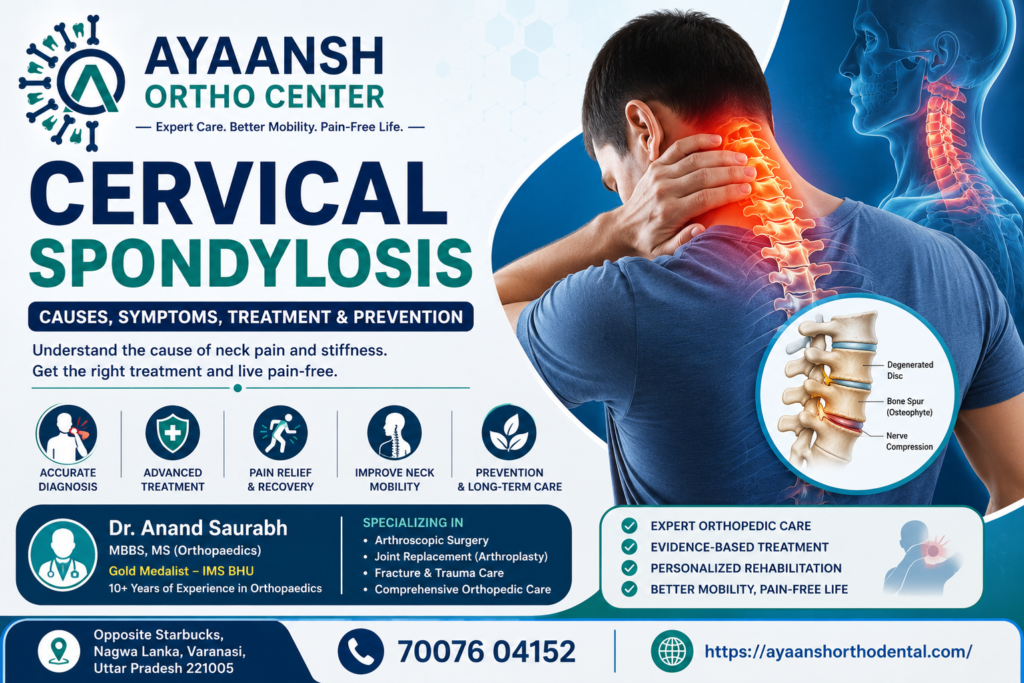
What Is Cervical Spondylosis?
Cervical spondylosis, also known as cervical osteoarthritis or neck arthritis, is a degenerative condition involving the cervical spine. Over time, the intervertebral discs lose water content, become thinner, and the surrounding joints and bones undergo wear and tear. This natural aging process may lead to bone spur (osteophyte) formation, disc degeneration, and narrowing of the spaces through which spinal nerves travel.
Many people have cervical spondylosis without noticeable symptoms. However, when degenerative changes compress nerves or the spinal cord, symptoms can become painful and may affect daily activities.
Understanding the Cervical Spine
The cervical spine consists of seven vertebrae (C1–C7) that support the head, protect the spinal cord, and allow movements such as turning, bending, and tilting the neck. Between these vertebrae are intervertebral discs that act as shock absorbers, while muscles, ligaments, and facet joints provide stability and flexibility.
As these structures age or become damaged, they may contribute to stiffness, pain, reduced mobility, or nerve compression.
Types of Cervical Spondylosis
- Mild cervical spondylosis
- Cervical disc degeneration
- Cervical osteoarthritis
- Cervical radiculopathy (nerve compression)
- Cervical myelopathy (spinal cord compression)
- Multilevel cervical spondylosis
Identifying the specific type and severity of cervical spondylosis helps determine the most appropriate treatment plan.
Common Symptoms of Cervical Spondylosis
- Persistent neck pain
- Neck stiffness
- Pain while turning the head
- Headaches originating from the neck
- Shoulder pain
- Pain radiating down one or both arms
- Tingling or numbness in the hands or fingers
- Muscle weakness in the arms
- Reduced neck mobility
- Clicking or grinding sensation during neck movement
- Loss of balance in severe cases
- Difficulty with fine hand movements (advanced cases)

Common Causes of Cervical Spondylosis
Cervical spondylosis develops gradually as the spine ages, but several factors can accelerate degeneration or worsen symptoms.
- Age-related wear and tear
- Poor posture
- Long hours on computers or mobile devices
- Repetitive neck movements
- Previous neck injuries
- Herniated cervical disc
- Bone spur formation
- Obesity & Smoking
- Lack of physical activity
- Genetic predisposition
In many patients, a combination of these factors contributes to the development of cervical spondylosis rather than a single cause.
Risk Factors
- Age over 40 years
- Office-based jobs
- Long-term computer work
- Frequent smartphone use
- Heavy manual labor
- Previous spinal injuries
- Poor ergonomics
- Family history of degenerative spine disease
When Should You See an Orthopedic Doctor?
Consult an orthopedic specialist if you experience:
- Neck pain lasting more than two weeks.
- Pain radiating into the shoulder or arm.
- Tingling or numbness in the hands.
- Muscle weakness.
- Difficulty walking or maintaining balance.
- Severe neck stiffness after an injury.
- Loss of bladder or bowel control (seek emergency care immediately).
Early evaluation can help identify nerve compression or spinal cord involvement before permanent damage occurs.
Diagnosis
Diagnosing cervical spondylosis begins with a detailed medical history and physical examination. Your orthopedic specialist will assess neck movement, muscle strength, reflexes, sensation, and signs of nerve compression.
Depending on your symptoms, additional investigations may include:
- Digital X-rays
- MRI scan
- CT scan
- Nerve conduction studies (when indicated)
- Blood tests (to rule out other conditions)

Treatment Options
Medications
Pain relievers, anti-inflammatory medicines, and muscle relaxants may reduce pain and improve neck movement. Always take medications under medical supervision.
Physiotherapy
A structured physiotherapy program helps improve flexibility, strengthen neck muscles, correct posture, and reduce recurrent pain.
Lifestyle Changes
Maintaining good posture, taking regular breaks from screens, adjusting workstation ergonomics, and sleeping with appropriate neck support can reduce symptoms.
Cervical Collar
A soft cervical collar may be recommended for short periods in selected cases to support the neck during acute pain episodes.
Interventional Procedures
For persistent symptoms that do not improve with conservative care, image-guided injections may be considered in carefully selected patients.
Surgery
Surgery is reserved for patients with severe nerve compression, cervical myelopathy, progressive neurological weakness, or persistent symptoms despite comprehensive non-surgical treatment.
Recovery and Rehabilitation
Recovery from cervical spondylosis varies depending on the severity of degeneration, nerve involvement, and how early treatment begins. Many patients experience significant improvement with a combination of medication, physiotherapy, posture correction, and lifestyle modifications. Consistently following the treatment plan and avoiding activities that strain the neck are essential for long-term relief.
A rehabilitation program may include:
- Guided physiotherapy
- Neck mobility exercises
- Strengthening of neck and shoulder muscles
- Posture correction
- Ergonomic workplace adjustments
- Gradual return to normal activities
Regular follow-up with your orthopedic specialist helps monitor progress and adjust treatment when necessary.

Exercises That May Help
Gentle exercises can improve flexibility, reduce stiffness, and strengthen the muscles supporting the cervical spine. These exercises should only be performed after evaluation by a healthcare professional, especially if pain radiates into the arms or neurological symptoms are present.
- Chin Tucks
- Neck Rotation Stretch
- Side Neck Stretch
- Scapular Retraction Exercise
- Shoulder Rolls
- Shoulder Blade Squeeze
- Upper Trapezius Stretch
How to Prevent Cervical Spondylosis
- Maintain correct posture while sitting and standing.
- Keep computer screens at eye level.
- Avoid prolonged mobile phone use with the head bent forward.
- Take stretching breaks every 30–45 minutes.
- Exercise regularly.
- Strengthen neck and shoulder muscles.
- Sleep with a supportive pillow.
- Maintain a healthy body weight. and avoid smoking.
- Lift heavy objects using proper technique.
Adopting these healthy habits can reduce stress on the cervical spine and lower the risk of recurrent neck pain.
Frequently Asked Questions
Can cervical spondylosis be cured?
Cervical spondylosis is a degenerative condition that cannot be completely reversed, but its symptoms can often be effectively managed with appropriate treatment, exercise, and lifestyle changes.
Is cervical spondylosis serious?
Most cases are mild, but untreated nerve or spinal cord compression can lead to weakness, balance problems, or reduced hand function. Early evaluation is important.
Can cervical spondylosis cause headaches?
Yes. Neck-related headaches are common and usually begin at the back of the head before spreading forward.
Which doctor should I consult for cervical spondylosis?
An orthopedic specialist can diagnose and manage cervical spondylosis through clinical evaluation, imaging, medications, rehabilitation, and, when required, surgical treatment.
Is MRI required for everyone?
No. MRI is recommended when symptoms suggest nerve compression, spinal cord involvement, persistent pain, or when surgery is being considered.
Can cervical spondylosis cause tingling in the hands?
Yes. Compression of cervical nerves may cause numbness, tingling, or weakness in the shoulders, arms, or hands.
Can cervical spondylosis be prevented?
Although aging cannot be prevented, maintaining good posture, staying physically active, strengthening neck muscles, and following ergonomic practices can significantly reduce the risk and severity of symptoms.

Expert Orthopedic Care at Ayaansh Ortho Center
If you are experiencing persistent neck pain, stiffness, tingling in the arms, or weakness, timely evaluation by an orthopedic specialist is essential. At Ayaansh Ortho Center, patients receive comprehensive evaluation and evidence-based treatment for neck, spine, joint, and trauma-related conditions.
Dr. Anand Saurabh (MBBS, MS Orthopaedics) is a Gold Medalist from IMS BHU with over 10 years of experience in orthopedics. His areas of practice include arthroscopic surgery, joint replacement (arthroplasty), fracture management, trauma care, and the treatment of a wide range of orthopedic conditions. Treatment plans are individualized based on each patient’s diagnosis, symptoms, lifestyle, and recovery goals.

Conclusion
Cervical spondylosis is a common cause of neck pain, but early diagnosis and appropriate treatment can help relieve symptoms, improve mobility, and prevent complications. Maintaining good posture, staying physically active, and seeking timely orthopedic care are key to protecting the health of your cervical spine. If neck pain persists or begins to affect your daily activities, consult an orthopedic specialist for a thorough evaluation and personalized treatment plan.
Book an Appointment
Looking for expert treatment for cervical spondylosis or chronic neck pain in Varanasi? Schedule a consultation at Ayaansh Ortho Center for comprehensive orthopedic evaluation and personalized care aimed at restoring comfort, mobility, and quality of life.
