 Skip to content

Osteoarthritis is the most common form of arthritis affecting the knee joint and a leading cause of chronic knee pain, stiffness, and reduced mobility. If you are looking for osteoarthritis knee treatment in Varanasi, understanding the causes, symptoms, diagnosis, and available treatment options is the first step toward effective pain relief and improved quality of life.
Knee osteoarthritis develops gradually as the protective cartilage covering the ends of the bones wears away over time. As the cartilage deteriorates, the bones begin to rub against each other, leading to pain, swelling, stiffness, and difficulty performing everyday activities such as walking, climbing stairs, or getting up from a chair.
Although osteoarthritis is more common with advancing age, it can also affect younger individuals due to previous injuries, obesity, repetitive stress on the joints, or genetic factors. Fortunately, early diagnosis and appropriate treatment can significantly reduce symptoms, slow disease progression, and help patients maintain an active lifestyle.
In this comprehensive guide, you’ll learn everything you need to know about knee osteoarthritis, including its causes, symptoms, diagnosis, treatment options, exercises, prevention strategies, and when to consult an orthopedic specialist.
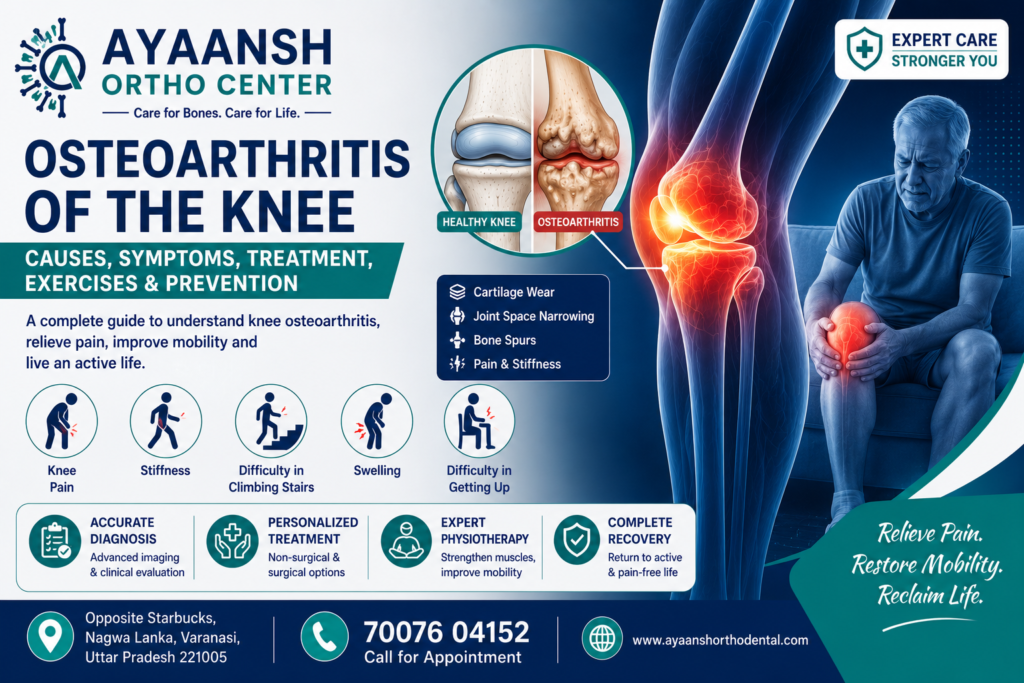
What Is Knee Osteoarthritis?
Knee osteoarthritis is a degenerative joint disease in which the smooth cartilage that cushions the knee joint gradually breaks down. As the cartilage wears away, the bones lose their protective covering and begin to rub against each other during movement.
This friction causes:
- Knee pain
- Joint stiffness
- Swelling
- Reduced range of motion
- Grinding or clicking sensations
- Difficulty walking
Over time, the joint may develop bone spurs (osteophytes), inflammation, and deformity if left untreated.
Osteoarthritis usually develops slowly over several years, making early diagnosis important for preserving joint function.
Understanding the Knee Joint
The knee is one of the largest and most complex joints in the body. It connects the femur (thigh bone), tibia (shin bone), and patella (kneecap).
A healthy knee contains:
- Articular cartilage that allows smooth movement.
- Menisci that act as shock absorbers.
- Ligaments that stabilize the joint.
- Synovial fluid that lubricates the joint.
- Strong surrounding muscles that support movement.
In osteoarthritis, the cartilage gradually deteriorates, reducing the joint’s ability to move smoothly and painlessly.
Causes of Knee Osteoarthritis
Several factors contribute to the development of knee osteoarthritis.
Age
The risk of osteoarthritis increases with age because cartilage naturally becomes thinner and less resilient over time.
Previous Knee Injury
Old fractures, ligament injuries, or meniscus tears can increase the likelihood of developing osteoarthritis years after the original injury.
Obesity
Excess body weight places additional stress on the knee joints. Every extra kilogram increases the force transmitted across the knees during walking and climbing stairs.
Repetitive Joint Stress
People whose occupations involve frequent kneeling, squatting, heavy lifting, or repetitive movements have a higher risk of developing knee osteoarthritis.
Genetics
Some individuals inherit a greater tendency to develop osteoarthritis due to genetic factors affecting cartilage and bone structure.
Muscle Weakness
Weak thigh and hip muscles reduce joint stability and increase stress on the knee.
Joint Deformities
Abnormal alignment of the legs, such as bow legs or knock knees, can lead to uneven wear of the cartilage.
Risk Factors
You may have an increased risk of knee osteoarthritis if you have:
- Age above 45 years
- Obesity
- Previous knee injury
- Family history of arthritis
- Sedentary lifestyle
- Weak leg muscles
- Diabetes
- Physically demanding occupations
- Poor posture or gait abnormalities
- Previous sports injuries
Maintaining a healthy weight and staying physically active are among the most effective ways to reduce your risk.
Symptoms of Knee Osteoarthritis
The symptoms usually develop gradually and become more noticeable over time.
Common symptoms include:
- Knee pain during walking
- Pain while climbing or descending stairs
- Morning stiffness lasting less than 30 minutes
- Swelling around the knee
- Clicking or grinding sensation (crepitus)
- Reduced flexibility
- Difficulty standing after prolonged sitting
- Knee instability
- Pain after physical activity
- Reduced walking distance
Many patients notice that symptoms worsen during cold weather or after prolonged periods of inactivity.

Stages of Knee Osteoarthritis
Orthopedic specialists often classify knee osteoarthritis into four stages based on severity.
Stage 1 – Mild
- Minimal cartilage wear
- Occasional discomfort
- Normal daily activities
Stage 2 – Early
- Mild pain during activity
- Small bone spurs
- Slight stiffness
Stage 3 – Moderate
- Frequent pain
- Noticeable cartilage loss
- Difficulty climbing stairs
- Swelling after activity
Stage 4 – Severe
- Significant cartilage damage
- Bone-on-bone contact
- Severe pain
- Difficulty walking
- Joint deformity in advanced cases
When Should You See an Orthopedic Doctor?
Consult an orthopedic specialist if you experience:
- Knee pain lasting more than two weeks
- Persistent swelling
- Difficulty walking
- Pain that interrupts sleep
- Knee instability
- Difficulty climbing stairs
- Reduced range of motion
- Pain that does not improve with rest
Early evaluation can help slow disease progression and improve long-term outcomes.
If your knee pain is caused by a different underlying condition, you may also find our detailed guide on Knee Pain: Causes, Symptoms, Treatment & Prevention helpful in understanding other possible causes and treatment options.
Conditions That Can Mimic Knee Osteoarthritis
Not every patient with knee pain has osteoarthritis. Several conditions can produce similar symptoms.
Pain radiating from the lower back due to Sciatica may sometimes be mistaken for knee pain, particularly when the discomfort travels down the leg.
Similarly, a Slip Disc (Herniated Disc) can compress spinal nerves and cause pain that extends into the thigh or knee.
People with chronic Back Pain often alter the way they walk, increasing stress on the knee joints and potentially worsening osteoarthritis symptoms.
Although less common, certain spinal conditions such as Cervical Spondylosis may affect balance and mobility, contributing to changes in posture and gait over time.
An accurate diagnosis is essential to ensure that the underlying cause of your symptoms is identified and treated appropriately.

Diagnosis of Knee Osteoarthritis
An orthopedic specialist will begin by discussing your symptoms, medical history, occupation, activity level, and any previous injuries. A detailed physical examination helps assess:
- Joint tenderness
- Swelling
- Range of motion
- Knee stability
- Walking pattern (gait)
- Muscle strength
- Presence of deformity
Depending on the findings, additional investigations may include:
- Digital X-rays (the primary imaging test for osteoarthritis)
- MRI Scan (if soft tissue injury is suspected)
- Blood Tests (to rule out inflammatory arthritis or infection)
- Joint Fluid Analysis in selected cases
X-rays often reveal narrowing of the joint space, bone spurs, and changes in the bone beneath the cartilage, helping determine the severity of osteoarthritis.
Osteoarthritis Knee Treatment in Varanasi
Treatment depends on the severity of arthritis, the patient’s age, activity level, and overall health. The primary goals are to reduce pain, improve mobility, preserve joint function, and slow disease progression.
Medications
Doctors may recommend pain-relieving medicines, anti-inflammatory drugs, or topical medications to reduce discomfort. These should always be taken under medical supervision.
Physiotherapy
Physiotherapy plays a central role in managing knee osteoarthritis. A structured rehabilitation program focuses on:
- Strengthening the muscles around the knee
- Improving flexibility
- Enhancing balance
- Correcting walking patterns
- Reducing joint stress
- Improving daily function
Lifestyle Modifications
Simple lifestyle changes can make a significant difference.
These include:
- Maintaining a healthy weight
- Avoiding prolonged standing
- Using supportive footwear
- Staying physically active
- Avoiding high-impact activities
- Following a balanced diet rich in calcium and vitamin D
Knee Braces and Walking Aids
In some cases, knee braces or walking aids may help reduce stress on the affected joint and improve mobility.
Advanced Treatment Options for Knee Osteoarthritis
If conservative treatment does not provide adequate relief, your orthopedic specialist may recommend advanced treatment options depending on the severity of arthritis and your daily functional needs.
Injection Therapy
Some patients may benefit from knee injections that help reduce inflammation and temporarily relieve pain. These are usually considered when medications and physiotherapy alone are insufficient.
Platelet-Rich Plasma (PRP)
PRP therapy may be considered in carefully selected patients with early osteoarthritis. Since treatment suitability varies from person to person, discuss the potential benefits and limitations with your orthopedic specialist.
Knee Replacement Surgery
For patients with advanced osteoarthritis who experience severe pain and significantly reduced quality of life despite conservative treatment, Total Knee Replacement (TKR) or Partial Knee Replacement may be recommended.
Modern knee replacement surgery aims to:
- Relieve chronic pain
- Improve walking ability
- Restore joint function
- Enhance quality of life
- Allow return to many daily activities
Surgery is usually considered only after non-surgical treatment options have been exhausted.

Recovery After Knee Osteoarthritis Treatment
Recovery depends on the severity of arthritis and the treatment approach.
Conservative Treatment
Most patients notice gradual improvement over several weeks with medications, physiotherapy, exercise, and lifestyle changes.
Typical timeline:
| Phase | Expected Recovery |
|---|---|
| Pain Reduction | 2–4 weeks |
| Improved Mobility | 4–8 weeks |
| Muscle Strengthening | 2–3 months |
| Long-Term Joint Protection | Ongoing |
After Knee Replacement Surgery
Recovery following knee replacement generally follows this pattern:
- Walking with support within 24–48 hours
- Improved mobility within 4–6 weeks
- Return to most daily activities within 2–3 months
- Continued improvement for up to one year
Recovery varies depending on age, overall health, commitment to physiotherapy, and the severity of arthritis before surgery.
Best Exercises for Knee Osteoarthritis
Regular exercise is one of the most effective ways to reduce pain, strengthen the muscles supporting the knee, and improve flexibility.
Recommended exercises include:
- Straight Leg Raises
- Quadriceps Sets
- Hamstring Stretches
- Heel Slides
- Mini Squats (under guidance)
- Step-Ups
- Stationary Cycling
- Swimming
- Walking on level ground
- Balance Exercises
Exercise programs should be individualized based on pain levels, joint condition, and medical advice.
Activities to Avoid
To protect your knee joints, avoid activities that place excessive stress on the cartilage.
These include:
- Running on hard surfaces
- Deep squatting
- Jumping exercises
- Heavy lifting without proper technique
- Prolonged kneeling
- Sitting for long periods without movement
- Wearing unsupportive footwear
- Ignoring persistent knee pain
Making small adjustments to your daily routine can significantly reduce joint strain.
Lifestyle Tips for Healthy Knees
Healthy lifestyle habits play an important role in slowing the progression of osteoarthritis.
Follow these recommendations:
- Maintain a healthy body weight.
- Exercise regularly.
- Strengthen your leg muscles.
- Eat a balanced diet.
- Stay hydrated.
- Wear comfortable, supportive shoes.
- Avoid smoking.
- Manage diabetes and other chronic conditions.
- Warm up before exercise.
- Seek early treatment for persistent knee pain.

How to Prevent Knee Osteoarthritis
Although aging cannot be prevented, many risk factors for knee osteoarthritis can be controlled.
Helpful preventive measures include:
- Maintain an ideal body weight.
- Stay physically active.
- Strengthen your quadriceps and hamstrings.
- Avoid repetitive knee injuries.
- Use proper lifting techniques.
- Treat sports injuries promptly.
- Improve posture and walking mechanics.
- Eat foods rich in calcium and vitamin D.
- Schedule regular orthopedic evaluations if symptoms develop.
Common Myths About Knee Osteoarthritis
Myth: Knee osteoarthritis is just a normal part of aging.
Fact: While aging increases the risk, many factors such as obesity, previous injuries, and muscle weakness contribute to the condition.
Myth: Exercise makes arthritis worse.
Fact: Appropriate exercise strengthens the muscles around the knee and often reduces pain and stiffness.
Myth: Surgery is the only treatment.
Fact: Most patients benefit from medications, physiotherapy, weight management, and lifestyle modifications before surgery is considered.
Myth: You should avoid walking completely.
Fact: Gentle walking is generally encouraged because it helps maintain joint mobility and muscle strength.
Myth: Knee pain always means osteoarthritis.
Fact: Knee pain can also result from ligament injuries, meniscus tears, tendon disorders, or pain radiating from the spine.
Possible Complications
Untreated knee osteoarthritis may lead to:
- Chronic pain
- Progressive stiffness
- Reduced mobility
- Muscle weakness
- Difficulty climbing stairs
- Joint deformity
- Reduced independence
- Increased risk of falls
Early treatment helps reduce these risks and improves long-term joint function.
Frequently Asked Questions
Is knee osteoarthritis curable?
There is currently no cure for osteoarthritis, but early treatment can effectively relieve symptoms, improve mobility, and slow disease progression.
Can young people develop knee osteoarthritis?
Yes. Previous injuries, obesity, repetitive stress, and certain medical conditions can increase the risk even in younger adults.
Which exercise is best for knee osteoarthritis?
Low-impact exercises such as walking, cycling, swimming, and strengthening exercises are generally recommended.
Is walking good for knee arthritis?
Yes. Walking in moderation helps improve joint mobility, strengthen muscles, and maintain overall fitness.
When is knee replacement recommended?
Knee replacement may be recommended when severe arthritis causes persistent pain and significant disability despite conservative treatment.
Does weight loss help?
Yes. Even modest weight loss reduces stress on the knee joints and often improves symptoms.
Can osteoarthritis affect both knees?
Yes. Many patients eventually develop osteoarthritis in both knees, although one knee may be more severely affected.
Which doctor should I consult?
An orthopedic specialist is the most appropriate doctor for diagnosing and treating knee osteoarthritis.
Can physiotherapy delay surgery?
In many patients, physiotherapy helps improve strength and function, potentially delaying the need for surgery.
Can osteoarthritis be prevented?
Although it cannot always be prevented, maintaining a healthy lifestyle significantly reduces the risk and slows progression.

Expert Orthopedic Care at Ayaansh Ortho Center
Living with knee osteoarthritis can make everyday activities challenging, but timely diagnosis and personalized treatment can help you stay active and independent.
At Ayaansh Ortho Center, patients receive comprehensive evaluation and evidence-based care for knee osteoarthritis, arthritis, sports injuries, fractures, back pain, slipped discs, and other orthopedic conditions.
Dr. Anand Saurabh (MBBS, MS Orthopaedics) is a Gold Medalist from IMS BHU with over 10 years of experience in orthopedics. His expertise includes arthroscopy, joint replacement surgery, trauma care, fracture management, and the treatment of a wide range of bone and joint disorders. Every treatment plan is individualized to help patients achieve long-term pain relief, improved mobility, and better quality of life.
Conclusion
Knee osteoarthritis is one of the most common causes of chronic knee pain, but it does not have to limit your lifestyle. Early diagnosis, appropriate treatment, regular exercise, weight management, and healthy lifestyle choices can significantly reduce pain and improve mobility.
If you are experiencing persistent knee pain, stiffness, or difficulty walking, seeking osteoarthritis knee treatment in Varanasi at the right time can help prevent further joint damage and improve your long-term quality of life.
Book an Appointment
If you are looking for osteoarthritis knee treatment in Varanasi, schedule a consultation at Ayaansh Ortho Center. Early orthopedic evaluation and personalized treatment can help relieve pain, restore movement, and support a healthier, more active life.
