 Skip to content

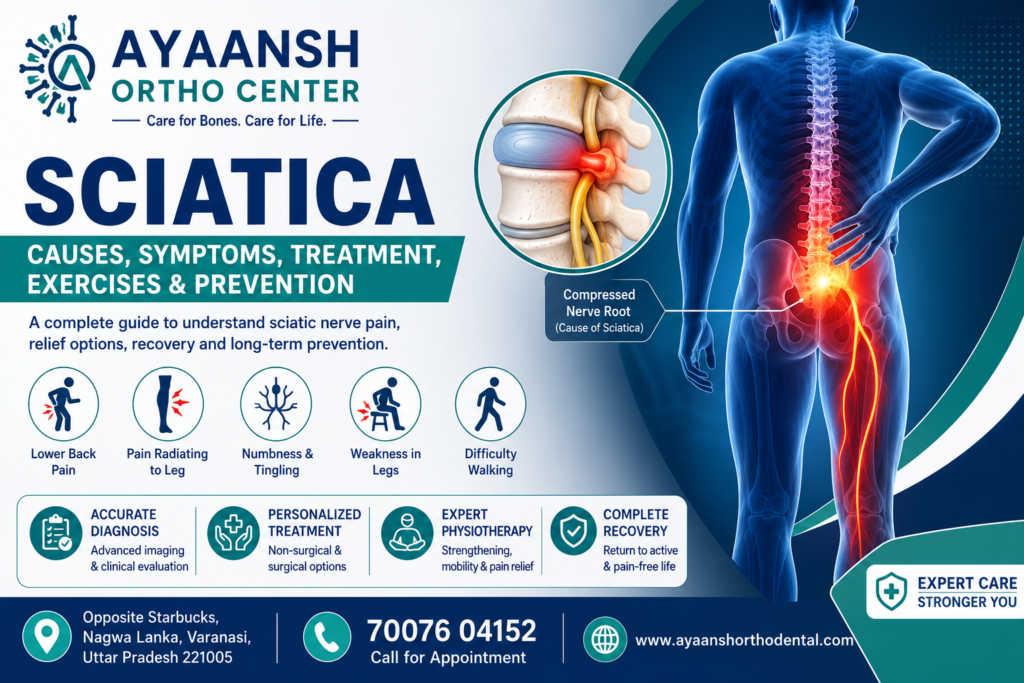
Sciatica is one of the most common causes of pain that radiates from the lower back into the buttock, thigh, leg, and sometimes even the foot. Unlike ordinary back pain, sciatica occurs when the sciatic nerve—the largest nerve in the human body—becomes irritated or compressed. The pain can range from mild discomfort to severe, burning, or electric shock-like sensations that interfere with walking, working, and everyday activities.
Many people mistakenly believe that sciatica is a disease. In reality, it is a symptom of an underlying spinal condition, most commonly a slipped disc (herniated disc). Other causes include spinal stenosis, bone spurs, degenerative disc disease, and injuries affecting the lower spine.
The good news is that most patients recover successfully with early diagnosis, conservative treatment, physiotherapy, and lifestyle modifications. Surgery is required only in selected cases where nerve compression is severe or symptoms fail to improve despite appropriate treatment.
In this comprehensive guide, you’ll learn everything you need to know about sciatica, including its causes, symptoms, diagnosis, treatment options, exercises, prevention strategies, and when it is time to consult an orthopedic specialist.
What Is Sciatica?
Sciatica refers to pain caused by irritation, inflammation, or compression of the sciatic nerve. Rather than being confined to the lower back, the pain usually travels along the course of the sciatic nerve, extending through the buttock and down one leg.
The sciatic nerve is formed by nerve roots originating from the lower spine (L4 to S3). It passes through the pelvis, travels beneath the buttock muscles, and continues down the back of each leg before branching into smaller nerves that supply the lower leg and foot.
When one or more of these nerve roots are compressed, patients may experience:
- Sharp shooting pain
- Burning sensation
- Tingling
- Numbness
- Muscle weakness
- Difficulty walking
- Pain that worsens while sitting
Most cases affect only one side of the body, although bilateral sciatica can occur in rare situations.
Understanding the Sciatic Nerve
The sciatic nerve is the largest and longest nerve in the human body. It plays a vital role in movement and sensation of the lower limbs.
Its functions include:
- Controlling muscles of the hips, thighs, legs, and feet.
- Providing sensation to most of the lower limb.
- Assisting with walking, standing, and balance.
- Coordinating lower-body movement.
Because the nerve travels such a long distance, compression at the lower back can produce symptoms far away from the spine, including pain in the calf, ankle, or foot.

What Causes Sciatica?
Sciatica develops when the sciatic nerve or its nerve roots become compressed or irritated.
The most common causes include:
1. Herniated (Slipped) Disc
A slipped disc is the leading cause of sciatica. The soft inner portion of a spinal disc bulges through its outer layer and presses against nearby nerve roots.
👉 If you’d like to learn more about this condition, read our article on Slip Disc (Herniated Disc): Causes, Symptoms, Treatment & Recovery.
2. Degenerative Disc Disease
As people age, spinal discs gradually lose water content and elasticity. This natural wear and tear may narrow the spaces where nerves exit the spine, leading to nerve irritation.
3. Spinal Stenosis
Spinal stenosis occurs when the spinal canal becomes narrower, placing pressure on the spinal cord or nerve roots. It is more common in older adults and may cause pain while walking that improves with rest.
4. Bone Spurs (Osteophytes)
Arthritic changes in the spine can produce extra bone growths that compress nearby nerves.
5. Piriformis Syndrome
The piriformis muscle, located deep within the buttock, may occasionally compress the sciatic nerve, causing symptoms similar to true sciatica.
6. Spinal Injuries
Falls, sports injuries, road traffic accidents, or fractures affecting the lumbar spine may damage or compress the sciatic nerve.
7. Tumors or Infections (Rare)
In uncommon cases, spinal tumors or infections can place pressure on the sciatic nerve and require urgent medical evaluation.
Risk Factors
Several factors increase the likelihood of developing sciatica:
- Age between 30 and 60 years
- Physically demanding occupations
- Frequent heavy lifting
- Poor posture
- Obesity
- Smoking
- Diabetes
- Sedentary lifestyle
- Weak core muscles
- Long hours of sitting
- Previous back injuries
Maintaining a healthy weight, staying active, and using proper lifting techniques can significantly reduce your risk.

Common Symptoms of Sciatica
Symptoms vary depending on the severity and location of nerve compression.
Common symptoms include:
- Pain starting in the lower back and radiating down one leg
- Buttock pain
- Sharp or stabbing pain
- Burning sensation
- Electric shock-like pain
- Tingling (“pins and needles”)
- Numbness
- Muscle weakness
- Pain while standing after prolonged sitting
- Difficulty walking
- Pain that worsens while coughing or sneezing
- Reduced mobility
Some patients notice that the pain travels all the way to the foot, while others experience symptoms only in the thigh or calf.
Left-Sided vs Right-Sided Sciatica
Sciatica usually affects only one side of the body.
Left-Sided Sciatica
- Pain radiates down the left buttock and leg.
- May affect walking or climbing stairs.
- Can be associated with numbness in the left foot.
Right-Sided Sciatica
- Pain extends into the right buttock and leg.
- Sitting for long periods often worsens symptoms.
- Weakness may occur in the right leg if nerve compression is significant.
The side affected depends on which spinal nerve root is compressed.
Acute vs Chronic Sciatica
Acute Sciatica
Acute sciatica develops suddenly and typically lasts less than six weeks. It often results from a slipped disc or minor spinal injury and usually responds well to conservative treatment.
Chronic Sciatica
Chronic sciatica persists for more than three months or recurs frequently. It may be associated with degenerative spinal conditions, spinal stenosis, or ongoing nerve compression. Long-term management often involves physiotherapy, exercise, and lifestyle modifications.

When Should You See an Orthopedic Doctor?
You should seek medical evaluation if you experience:
- Pain lasting longer than two weeks.
- Pain radiating below the knee.
- Persistent numbness or tingling.
- Difficulty walking.
- Muscle weakness in the leg or foot.
- Recurrent episodes of severe leg pain.
- Symptoms that interfere with work or daily activities.
- Pain that does not improve with rest or prescribed medications.
Because sciatica is frequently related to spinal disorders, timely evaluation helps identify the underlying cause and prevents complications.
If your symptoms began as lower back pain before radiating into your leg, you may also find our guide on Back Pain: Causes, Symptoms, Treatment & When to See an Orthopedic Doctor helpful in understanding the early signs and treatment options.
Emergency Warning Signs
Seek immediate medical attention if you experience:
- Loss of bladder control.
- Loss of bowel control.
- Severe weakness in one or both legs.
- Numbness around the groin or inner thighs (saddle anesthesia).
- Sudden inability to walk.
- Severe pain after a major fall or accident.
- High fever associated with severe back pain.
These symptoms may indicate Cauda Equina Syndrome or another serious spinal emergency requiring urgent treatment.
Diagnosis of Sciatica
An orthopedic specialist begins by taking a detailed medical history and performing a physical examination. During the evaluation, your doctor will assess:
- The location and pattern of pain
- Muscle strength
- Reflexes
- Sensation
- Walking pattern (gait)
- Range of motion of the spine
- Straight Leg Raise (SLR) test, which helps identify sciatic nerve irritation
Depending on your symptoms, additional investigations may include:
- Digital X-rays (to evaluate spinal alignment and bone changes)
- MRI Scan (the most effective test for identifying slipped discs and nerve compression)
- CT Scan (when MRI is not suitable)
- Nerve Conduction Studies or Electromyography (EMG) in selected cases
- Blood Tests, if infection or inflammatory conditions are suspected
An accurate diagnosis helps determine the most appropriate treatment plan and avoids unnecessary procedures.
Treatment Options for Sciatica
Treatment depends on the underlying cause, the severity of symptoms, and how long the condition has been present. Most patients improve without surgery.
Medications
Doctors may prescribe pain relievers, anti-inflammatory medicines, muscle relaxants, or medications that help reduce nerve pain. These should always be taken under medical supervision.
Physiotherapy
Physiotherapy is one of the most effective non-surgical treatments for sciatica. A personalized rehabilitation program can help:
- Reduce pain
- Improve flexibility
- Strengthen the core muscles
- Improve posture
- Reduce pressure on the sciatic nerve
- Restore normal movement
Lifestyle Modifications
Simple changes in daily habits can make a significant difference, including:
- Avoid prolonged sitting.
- Maintain a healthy weight.
- Use proper lifting techniques.
- Stay physically active.
- Improve workplace ergonomics.
- Take regular stretching breaks.
Epidural Steroid Injections
For patients with persistent nerve pain that does not improve with medications and physiotherapy, epidural steroid injections may reduce inflammation around the affected nerve root and provide temporary pain relief.
Surgery
Surgery is considered only when conservative treatment fails, symptoms continue to worsen, or there is significant nerve compression causing progressive weakness or loss of bladder or bowel control.
Modern surgical techniques aim to relieve pressure on the sciatic nerve while preserving spinal stability.
Recovery Timeline
The recovery period for sciatica depends on the underlying cause, the severity of nerve compression, and how soon treatment begins. While many patients recover within a few weeks, others with chronic or severe nerve compression may require several months of rehabilitation.
A typical recovery timeline is:
| Recovery Phase | Expected Duration | What to Expect |
|---|---|---|
| Acute Phase | 1–2 Weeks | Pain control, reduced inflammation, activity modification |
| Early Recovery | 2–6 Weeks | Improved mobility with medications and physiotherapy |
| Rehabilitation | 6–12 Weeks | Strengthening exercises, posture correction, return to daily activities |
| Long-Term Recovery | 3–6 Months | Prevention of recurrence through exercise and lifestyle changes |
Recovery varies from person to person. Following your orthopedic specialist’s advice and completing your rehabilitation program are essential for achieving the best outcome.

Best Exercises for Sciatica
Exercise is one of the most effective ways to relieve sciatic nerve pain, strengthen the spine, and reduce the risk of future episodes. However, exercises should always be performed under the guidance of a healthcare professional, especially during the early stages of recovery.
Commonly recommended exercises include:
- McKenzie Extension Exercise
- Pelvic Tilt
- Cat-Cow Stretch
- Bird-Dog Exercise
- Bridge Exercise
- Knee-to-Chest Stretch
- Hamstring Stretch
- Piriformis Stretch
- Gentle Walking
- Core Strengthening Exercises
Stop exercising immediately if pain becomes significantly worse or if you develop increasing numbness, weakness, or difficulty walking.
Activities to Avoid During Recovery
Certain activities can increase pressure on the sciatic nerve and delay healing.
Avoid:
- Lifting heavy objects
- Sudden twisting movements
- Prolonged sitting
- Poor posture
- High-impact exercises
- Running on hard surfaces during the acute phase
- Sleeping on an unsupportive mattress
- Ignoring persistent pain
Small changes in your daily routine can significantly reduce stress on your spine and promote recovery.
Lifestyle Tips for Managing Sciatica
Healthy lifestyle habits can help reduce pain and prevent future episodes.
These include:
- Maintain a healthy body weight.
- Stay physically active.
- Strengthen your abdominal and back muscles.
- Practice good posture while sitting and standing.
- Use ergonomic furniture at work.
- Stretch regularly if your job involves prolonged sitting.
- Stay hydrated.
- Eat a balanced diet rich in calcium and vitamin D.
- Quit smoking.
- Get adequate sleep.
These habits not only improve spinal health but also support overall musculoskeletal wellness.
How to Prevent Sciatica
Although not every case of sciatica can be prevented, adopting healthy spinal habits significantly reduces the risk.
Follow these preventive measures:
- Exercise regularly.
- Strengthen your core muscles.
- Maintain proper posture.
- Lift heavy objects correctly.
- Avoid prolonged sitting.
- Maintain a healthy weight.
- Stretch before physical activity.
- Wear supportive footwear.
- Avoid smoking.
- Seek early treatment for back pain.
If you frequently experience lower back pain, addressing it early can help prevent progression to sciatica.
Common Myths About Sciatica
Myth: Sciatica is a disease.
Fact: Sciatica is a symptom caused by irritation or compression of the sciatic nerve.
Myth: Bed rest is the best treatment.
Fact: Prolonged bed rest may slow recovery. Gentle movement and guided physiotherapy are usually more beneficial.
Myth: Surgery is always necessary.
Fact: Most patients recover successfully without surgery.
Myth: Sciatica only affects older adults.
Fact: Sciatica can occur at any age, particularly in individuals with slipped discs, poor posture, or physically demanding occupations.
Myth: Once treated, sciatica never returns.
Fact: Recurrence is possible if preventive measures and strengthening exercises are not continued.
Possible Complications
Untreated sciatica may lead to:
- Chronic nerve pain
- Persistent numbness
- Muscle weakness
- Difficulty walking
- Reduced quality of life
- Permanent nerve damage (rare)
- Loss of bladder or bowel control (medical emergency)
Early diagnosis and appropriate treatment significantly reduce the risk of complications.

Frequently Asked Questions
What is the most common cause of sciatica?
The most common cause is a slipped (herniated) disc pressing on the sciatic nerve.
Can sciatica heal without surgery?
Yes. Most patients improve with medications, physiotherapy, exercise, and lifestyle modifications.
How long does sciatica last?
Acute sciatica often improves within 4 to 8 weeks, while chronic cases may require longer rehabilitation.
Is walking good for sciatica?
Yes. Gentle walking is generally beneficial because it improves circulation, reduces stiffness, and supports recovery.
Can sitting make sciatica worse?
Yes. Prolonged sitting increases pressure on the sciatic nerve and may worsen symptoms.
Is MRI necessary for every patient?
No. MRI is usually recommended when symptoms persist, neurological deficits are present, or surgery is being considered.
Which sleeping position is best for sciatica?
Many patients find relief by sleeping on their side with a pillow between the knees or on their back with a pillow under the knees.
Can physiotherapy cure sciatica?
Physiotherapy cannot remove the underlying cause in every case, but it is highly effective in reducing pain, improving function, and preventing recurrence.
When should I seek emergency care?
Seek immediate medical attention if you experience loss of bladder or bowel control, severe leg weakness, or numbness around the groin area.
Which doctor should I consult for sciatica?
An orthopedic specialist can diagnose the underlying cause of sciatica and recommend the most appropriate treatment plan.

Expert Orthopedic Care at Ayaansh Ortho Center
Sciatica can significantly affect your ability to work, sleep, and enjoy everyday activities. Early diagnosis and appropriate treatment are essential to relieve pain, restore movement, and prevent long-term complications.
At Ayaansh Ortho Center, patients receive comprehensive evaluation and personalized treatment for sciatica, slipped discs, back pain, arthritis, fractures, sports injuries, and other orthopedic conditions.
Dr. Anand Saurabh (MBBS, MS Orthopaedics) is a Gold Medalist from IMS BHU with over 10 years of experience in orthopedics. His expertise includes arthroscopy, joint replacement (arthroplasty), trauma care, fracture management, and the treatment of a wide range of spine and joint disorders. Every patient receives an individualized treatment plan based on their condition, lifestyle, and recovery goals.
Related Articles
Understanding related orthopedic conditions can help you recognize symptoms early and seek timely treatment.
- Back Pain: Causes, Symptoms, Treatment & When to See an Orthopedic Doctor – Learn about common causes of lower back pain and when it requires medical evaluation.
- Slip Disc (Herniated Disc): Causes, Symptoms, Treatment & Recovery – Discover how a herniated disc can compress the sciatic nerve and lead to sciatica.
- Cervical Spondylosis: Causes, Symptoms, Treatment & Prevention – Understand age-related changes in the neck and their symptoms.
- Knee Pain: Causes, Symptoms, Treatment & Prevention – Learn how conditions affecting the spine can sometimes cause pain that radiates toward the leg and may be mistaken for knee problems.
Conclusion
Sciatica is a common condition caused by irritation or compression of the sciatic nerve, often resulting from a slipped disc or other spinal disorders. Although the pain can be severe, most patients recover successfully with timely diagnosis, appropriate medications, physiotherapy, and healthy lifestyle modifications.
If your leg pain is accompanied by numbness, weakness, or persistent lower back pain, do not ignore the symptoms. Consulting an orthopedic specialist early can help identify the underlying cause and prevent long-term complications.
Book an Appointment
If you are experiencing symptoms of sciatica or persistent lower back pain, schedule a consultation at Ayaansh Ortho Center in Varanasi. Early orthopedic evaluation and a personalized treatment plan can help relieve pain, restore mobility, and improve your quality of life.
