 Skip to content
Stiffness, soreness, or a sharp ache in your neck can make simple daily movements incredibly difficult. Indeed, neck pain is a highly common musculoskeletal issue that affects millions of people worldwide. Because we spend hours looking at screens, poor posture has become a major contributor to cervical discomfort. Fortunately, comprehensive options for Neck Pain Treatment in Varanasi are available to help you find lasting relief. Understanding the root causes of your cervical pain can guide you toward the right path of recovery.
If you are experiencing persistent neck stiffness, radiating arm pain, or frequent tension headaches, seeking a professional evaluation is essential. At Ayaansh Ortho Center, our spine specialists design personalized care plans to restore your spinal health. In this comprehensive guide, we will analyze the anatomy of the cervical spine, common causes, recognizable symptoms, advanced diagnostic tests, and modern treatment options for neck pain.
Why Seek Professional Neck Pain Treatment in Varanasi?
Historically, many people dismiss neck pain as a temporary muscle strain. However, chronic neck discomfort often indicates an underlying structural issue in the cervical spine. Therefore, seeking timely Neck Pain Treatment in Varanasi is crucial to prevent progressive nerve damage. Early orthopedic intervention can halt the degeneration of spinal discs and preserve your upper-body mobility.
Furthermore, self-treatment or ignoring severe neck symptoms can lead to chronic complications. For instance, untreated nerve compression can cause permanent muscle weakness in your hands. Consequently, consulting an experienced spine specialist ensures that you receive an accurate diagnosis. At Ayaansh Ortho Center, we combine advanced diagnostics with evidence-based therapies to treat your pain at its source.
Anatomy of the Cervical Spine
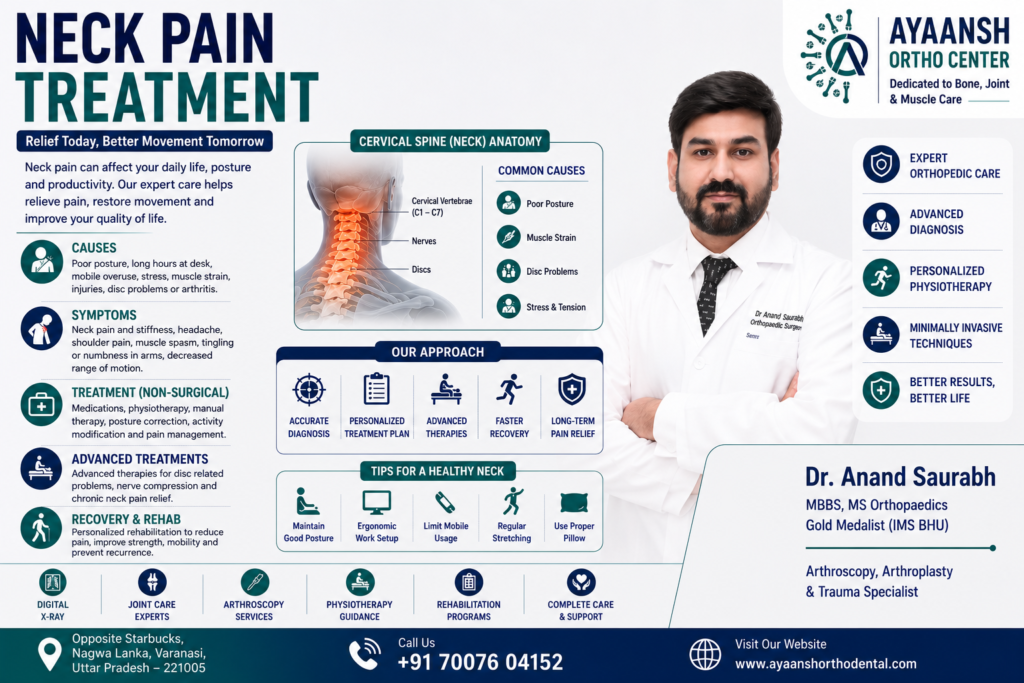
First, we must examine the anatomical structure of the neck. The neck is also known as the cervical spine. Specifically, this region consists of several complex components working together.
- Cervical Vertebrae: The cervical spine contains seven small, stacked bones numbered C1 to C7. These vertebrae support the weight of your head. They also protect the delicate spinal cord.
- Intervertebral Discs: Flat, gel-filled cushions sit between each vertebra. These discs act as shock absorbers. Consequently, they allow your neck to bend and rotate smoothly.
- Facet Joints: These small joints connect the vertebrae to each other. Specifically, they facilitate sliding movements while preventing excessive spinal twisting.
- Nerve Roots: Exiting the spinal cord, these nerves travel through small openings in the vertebrae. They supply sensation and strength to your shoulders, arms, and hands.
- Muscles and Ligaments: A complex network of soft tissues supports the cervical spine. These muscles allow you to lift, tilt, and turn your head.
Consequently, any damage to these components can trigger localized or radiating discomfort. Patients seeking Neck Pain Treatment in Varanasi should understand that protecting these structures is key to a pain-free life.

Common Causes of Cervical Neck Pain
Generally, a variety of postural habits, age-related changes, and injuries can cause cervical pain. Identifying the specific cause is essential for planning your rehabilitation.
1. Muscle Strain and Poor Posture
First, poor posture is the leading cause of acute neck strain. For example, hunching over your computer or tilting your head down to read your smartphone stresses the neck muscles. This modern issue is widely known as “text neck.” Additionally, sleeping with an unsupportive pillow can strain the cervical muscles overnight.
2. Cervical Spondylosis (Spinal Arthritis)
Second, natural wear and tear can cause arthritis in the cervical spine. Over time, the protective cartilage in the facet joints degenerates. As a result, the bones rub against each other, leading to bone spurs and chronic stiffness. If you suspect arthritic wear, read our detailed guide on Cervical Spondylosis Treatment to understand its management.
3. Herniated Disc (Cervical Slip Disc)
Third, the gel-like center of an intervertebral disc can bulge or rupture. When this herniation occurs, the protruding disc can press directly on adjacent nerve roots. This nerve compression causes sharp, radiating pain down the arm. If you experience radiating pain, explore our article on Slip Disc Treatment for advanced recovery options.
4. Spinal Stenosis
Fourth, spinal stenosis involves the narrowing of the spinal canal. This narrowing places pressure on the spinal cord and nerve roots. Consequently, patients experience progressive weakness, numbness, and coordination issues in their limbs. Seeking expert Neck Pain Treatment in Varanasi can help prevent this condition from worsening.
5. Whiplash and Traumatic Injuries
Finally, sudden, forceful acceleration or deceleration can cause whiplash. This injury is common during rear-end motor vehicle collisions. Specifically, the sudden movement overstretches the neck ligaments and muscles, causing severe, acute pain.
Recognizable Symptoms of Cervical Conditions
When the cervical spine is compromised, symptoms can extend beyond localized neck discomfort.
- Localized Neck Stiffness: A constant, dull ache that worsens when holding your head in one position for long periods.
- Limited Range of Motion: Difficulty turning your head to check your blind spot while driving or tilting your ear toward your shoulder.
- Radiating Arm Pain (Radiculopathy): A sharp, shooting, or burning pain that travels down your shoulder, arm, and into your fingers.
- Numbness or Tingling: A “pins and needles” sensation in your arm, hand, or fingers, indicating nerve compression.
- Cervicogenic Headaches: Headaches that start at the base of your skull or neck and radiate toward your forehead.
- Muscle Spasms: Sudden, painful contractions of the neck and upper back muscles.

Red Flag Symptoms: When to Seek Immediate Medical Attention
Specifically, some symptoms indicate a severe neurological emergency. You must seek immediate emergency care if your neck pain is accompanied by:
- Progressive, bilateral weakness in your arms, hands, or legs.
- Loss of fine motor skills, such as difficulty buttoning a shirt.
- Sudden balance issues or difficulty walking.
- New bowel or bladder incontinence.
- Severe neck pain following a high-impact fall or car accident.
For other radiating spinal symptoms, you can also read our guide on Sciatica Treatment to understand how lower back issues compare to cervical nerve compression.
Clinical Evaluation and Orthopedic Examinations
To determine the exact source of your cervical discomfort during your consultation for Neck Pain Treatment in Varanasi, our orthopedic specialist will perform several physical examinations.
- Spurling’s Test: First, the doctor gently extends, rotates, and applies downward pressure on your head. If this maneuver reproduces radiating pain down your arm, it confirms cervical nerve root compression.
- Neurological Assessment: Second, the doctor tests your reflexes, muscle strength, and skin sensation in your arms and hands. This helps identify the exact nerve root level involved.
- Range of Motion Testing: Third, the doctor measures how far you can comfortably move your head in different directions.
Diagnostic Imaging:
- Digital X-rays: First, X-rays show the alignment of your cervical vertebrae. They help detect bone spurs, joint narrowing, and spinal instability.
- MRI (Magnetic Resonance Imaging): Second, an MRI is the gold standard for soft tissue evaluation. Specifically, it provides highly detailed images of herniated discs, nerve compression, and the spinal cord.
- CT Scan: Finally, if the doctor needs a detailed view of the bony architecture, a CT scan is highly useful.
Treatment Strategies: Non-Surgical vs. Surgical
At Ayaansh Ortho Center, we believe in a conservative-first approach. Fortunately, the vast majority of patients recover fully without undergoing surgery.
1. Non-Surgical Treatment Protocols
- Ergonomic Modifications: To begin with, adjusting your workspace is essential. Place your computer screen at eye level. Additionally, use a supportive chair to maintain your spine’s natural curve.
- Medications: The doctor may prescribe oral anti-inflammatory drugs (NSAIDs) to manage acute pain. Furthermore, muscle relaxants can help relieve severe muscle spasms. For neuropathic pain, specific nerve-calming medications are highly beneficial.
- Physical Therapy: A structured program is the cornerstone of conservative recovery. The therapist guides you through gentle stretches and progressive strengthening exercises for your neck and upper back.
Advanced Options for Neck Pain Treatment in Varanasi
- Cervical Epidural Steroid Injections: If oral medications fail to provide relief, the doctor can perform a targeted injection. Under precise fluoroscopic guidance, a steroid is injected into the epidural space. Consequently, this directly reduces inflammation around the compressed nerve roots.
- Selective Nerve Root Blocks (SNRBs): This injection target a specific compressed nerve. It provides both diagnostic information and localized pain relief.
2. Surgical Interventions
Occasionally, patients with progressive muscle weakness or severe spinal cord compression require surgery.
- Anterior Cervical Discectomy and Fusion (ACDF): The surgeon removes the damaged herniated disc through a small incision in the front of the neck. He then fuses the adjacent vertebrae together to stabilize the spine.
- Cervical Disc Replacement (Arthroplasty): Instead of fusing the bones, the surgeon replaces the damaged disc with an artificial, mobile implant. Consequently, this procedure preserves your natural neck movement.

Structured Physical Therapy and Rehabilitation
A dedicated physical therapy program is crucial for a complete and lasting recovery. Physical rehabilitation progresses in structured phases.
Phase 1: Pain Relief and Gentle Stretching
During this early stage, the goal is to reduce acute muscle tension and restore basic mobility.
- Chin Tucks: Sit tall and look straight ahead. Slowly pull your chin straight back, as if making a “double chin.” Hold for 5 seconds and relax. Repeat 10 times. This strengthens the deep neck flexors.
- Upper Trapezius Stretch: Gently tilt your right ear toward your right shoulder. Hold for 20 seconds. Repeat on the left side. This relieves tension in the upper back.
Phase 2: Progressive Strengthening
Once pain decreases, exercises focus on building support for the cervical spine.
- Prone Cobra: Lie face down on the floor. Slowly lift your head, chest, and arms off the ground, squeezing your shoulder blades together. Hold for 5 seconds and lower. Complete 10 repetitions.
- Isometric Neck Exercises: Place your hand on your forehead. Gently push your head forward against your hand, resisting any actual head movement. Hold for 5 seconds. Repeat pushing backward and sideways.
If you struggle with other spinal issues, you can also explore our resource on Back Pain Treatment to understand how to keep your entire spine healthy.
Ergonomic Tips for a Pain-Free Neck
To protect your cervical spine and prevent the recurrence of neck pain, implement these simple workstation modifications:
- Adjust Your Monitor Height: Position your computer screen so the top third of the screen is at your eye level. This prevents you from tilting your head forward.
- Support Your Arms: Adjust your chair armrests so your elbows are bent at a 90-degree angle. This reduces the strain on your trapezius and shoulder muscles.
- Take Regular Micro-Breaks: Follow the 30-30 rule. For every 30 minutes of sitting, stand up and stretch your neck for 30 seconds.
- Use a Hands-Free Headset: Avoid cradling your phone between your ear and shoulder during calls.
- Maintain Neutral Sleeping Posture: Use a pillow that keeps your head aligned with your spine. Avoid sleeping on your stomach, as this forces your neck to twist.
Expert Cervical Care at Ayaansh Ortho Center in Varanasi
If persistent cervical discomfort is affecting your sleep or daily tasks, seeking specialized care is critical. Ayaansh Ortho Center, located opposite Starbucks, Nagwa Lanka, Varanasi, provides advanced diagnostic and therapeutic services for spine disorders, sports injuries, and joint conditions.
Our orthopedic services are led by Dr. Anand Saurabh (MBBS, MS Orthopaedics), a Gold Medalist from IMS BHU with over 10 years of clinical experience. Dr. Anand Saurabh specializes in minimally invasive spine care, trauma management, and joint reconstruction. At our clinic, we provide the leading Neck Pain Treatment in Varanasi. We develop personalized, evidence-based treatment plans to help you relieve pain, restore spinal biomechanics, and return to your active lifestyle safely. To learn more about our specialist, please visit the profile of Dr. Anand Saurabh.
Do not let chronic cervical pain compromise your focus and daily comfort. If you require an accurate diagnosis or a professional spinal evaluation, Contact us today to book an appointment.
