 Skip to content
Back pain is one of the most common reasons people visit an orthopedic specialist. While muscle strain is a frequent cause, persistent back pain that radiates into the legs or arms may indicate a slip disc, also known as a herniated disc or prolapsed intervertebral disc (PIVD). This condition can interfere with daily activities, reduce mobility, and significantly affect quality of life if left untreated.
A slipped disc can occur gradually due to age-related wear and tear or suddenly after lifting heavy objects, twisting the spine, or sustaining an injury. The condition may cause localized pain, numbness, tingling, muscle weakness, or even difficulty walking when nearby nerves are compressed.
Fortunately, most patients improve with timely diagnosis, medications, physiotherapy, and lifestyle modifications. Surgery is required only in selected cases where conservative treatment does not provide adequate relief or when significant nerve compression is present.
This comprehensive guide explains the causes, symptoms, diagnosis, treatment options, recovery process, and prevention strategies for slipped discs, helping you understand when it is time to consult an orthopedic specialist.
What Is a Slip Disc?
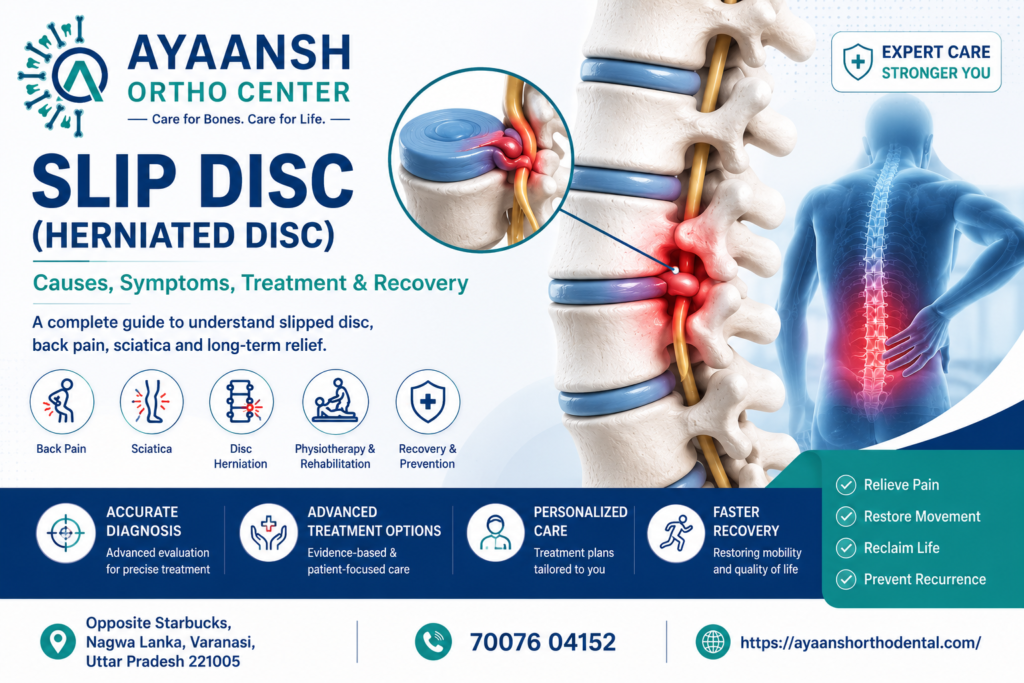
A slip disc, medically known as a herniated disc or prolapsed intervertebral disc (PIVD), occurs when the soft gel-like center of an intervertebral disc pushes through a tear in its tough outer layer. Although the term “slip disc” is widely used, the disc does not actually slip out of place. Instead, the inner material bulges or herniates, which may press against nearby spinal nerves.
The human spine contains discs between each vertebra. These discs act as shock absorbers, allowing the spine to bend, twist, and move comfortably. When a disc becomes damaged or weakened, it may herniate and irritate surrounding nerves, resulting in pain and neurological symptoms.
Slip discs most commonly occur in the lumbar spine (lower back) but can also develop in the cervical spine (neck). Thoracic slipped discs are comparatively uncommon.
Understanding the Spine and Intervertebral Discs
The spine is made up of 33 vertebrae connected by joints, muscles, ligaments, and intervertebral discs. These discs perform several important functions:
- Absorb shock during walking, running, and lifting.
- Allow flexibility and smooth spinal movement.
- Distribute body weight evenly.
- Protect the vertebrae from excessive stress.
Each disc has two main parts:
- Annulus Fibrosus: A strong outer ring made of fibrous tissue.
- Nucleus Pulposus: A soft, jelly-like center that acts as a cushion.
With aging or repeated stress, the annulus fibrosus may weaken, allowing the nucleus pulposus to bulge outward. If the bulging material compresses a nearby nerve, symptoms such as pain, numbness, or weakness may develop.

Types of Slip Disc
Depending on the location and severity, slipped discs are classified into different types.
- Cervical Herniated Disc (Neck)
- Thoracic Herniated Disc (Upper Back)
- Lumbar Herniated Disc (Lower Back)
- Disc Bulge
- Disc Protrusion
- Disc Extrusion
- Sequestered Disc Fragment
The exact type influences symptoms, treatment options, and recovery time.
Common Symptoms of a Slip Disc
Symptoms vary depending on which spinal nerve is affected and the severity of compression.
Common symptoms include:
- Persistent lower back pain
- Neck pain
- Pain radiating into one leg (Sciatica)
- Pain radiating into one arm
- Tingling sensation
- Numbness
- Burning pain
- Muscle weakness
- Difficulty standing for long periods
- Pain while bending or lifting
- Reduced flexibility
- Difficulty walking
- Loss of balance in severe cases
Many patients notice that coughing, sneezing, or prolonged sitting worsens their symptoms due to increased pressure on the affected disc.
Common Causes of Slip Disc
A slipped disc usually develops because of gradual degeneration, but sudden injuries can also cause disc damage.
Common causes include:
- Age-related disc degeneration
- Lifting heavy objects incorrectly
- Sudden twisting movements
- Poor posture
- Obesity
- Long hours of sitting
- Physically demanding occupations
- Repetitive bending
- Sports injuries
- Road traffic accidents
- Smoking
- Lack of regular exercise
In many cases, multiple risk factors contribute to the development of a slipped disc.

Risk Factors
Certain individuals have a higher likelihood of developing a herniated disc.
Risk factors include:
- Age between 30 and 50 years
- Sedentary lifestyle
- Obesity
- Smoking
- Weak core muscles
- Occupations involving heavy lifting
- Frequent driving
- Family history
- Poor workplace ergonomics
- Previous spinal injuries
Although these factors increase risk, maintaining good spinal health can significantly reduce the likelihood of disc problems.
When Should You See an Orthopedic Doctor?
While mild back pain may improve with rest, you should consult an orthopedic specialist if you experience:
- Back pain lasting longer than two weeks.
- Pain radiating down the leg or arm.
- Tingling or numbness.
- Muscle weakness.
- Difficulty walking.
- Pain interfering with sleep.
- Recurrent episodes of severe back pain.
- Symptoms not improving with home treatment.
Early diagnosis often prevents complications and helps achieve faster recovery.
Emergency Warning Signs
Seek immediate medical attention if you develop:
- Loss of bladder control.
- Loss of bowel control.
- Severe weakness in both legs.
- Numbness around the groin or inner thighs.
- Sudden inability to walk.
- Severe back pain after a major accident.
- High fever associated with severe spinal pain.
These symptoms may indicate serious nerve compression or another medical emergency requiring urgent treatment.
Diagnosis of Slip Disc
Accurate diagnosis begins with a detailed medical history and physical examination. Your orthopedic specialist will ask about the location of pain, duration of symptoms, previous injuries, occupation, and activities that worsen or relieve discomfort.
During the examination, muscle strength, reflexes, sensation, spinal movement, and nerve function are assessed.
Depending on the clinical findings, your doctor may recommend:
- Digital X-rays
- MRI Scan (the preferred investigation for diagnosing a herniated disc)
- CT Scan
- Nerve Conduction Studies (when necessary)
- Blood Tests (to rule out infection or inflammatory conditions)
MRI provides detailed images of discs, nerves, and soft tissues, making it the most valuable imaging study for confirming a slipped disc.

Treatment Options for Slip Disc
Treatment depends on the severity of symptoms, neurological findings, and imaging results. Most patients recover without surgery.
Medications
Pain-relieving medicines, anti-inflammatory drugs, muscle relaxants, and medications for nerve pain may help reduce discomfort and improve mobility. Medicines should always be taken under medical supervision.
Physiotherapy
Physiotherapy plays a central role in recovery. A structured rehabilitation program focuses on improving flexibility, strengthening core muscles, correcting posture, reducing pain, and restoring normal movement patterns.
Lifestyle Modifications
Small lifestyle changes can significantly reduce pressure on the spine.
These include:
- Maintaining a healthy weight
- Avoiding prolonged sitting
- Practicing correct lifting techniques
- Improving workplace ergonomics
- Taking regular stretching breaks
- Sleeping on a supportive mattress
Epidural Steroid Injections
In selected patients with persistent nerve pain, image-guided steroid injections may reduce inflammation and provide temporary symptom relief while rehabilitation continues.
Surgery
Surgery is considered only when conservative treatment fails, symptoms progressively worsen, or there is significant nerve compression causing weakness or loss of bladder or bowel control.
Modern surgical procedures aim to relieve nerve pressure while preserving spinal stability whenever possible.
Recovery and Rehabilitation
Recovery from a slipped disc depends on several factors, including the severity of the herniation, the affected spinal level, the duration of symptoms, and how early treatment begins. Many patients begin to notice improvement within a few weeks with proper medical care, while others may require several months of rehabilitation.
A successful recovery plan usually includes:
- Pain management
- Guided physiotherapy
- Core strengthening exercises
- Posture correction
- Weight management
- Activity modification
- Regular follow-up with an orthopedic specialist
Remaining physically active within comfortable limits is generally encouraged, as prolonged bed rest may delay recovery and weaken the muscles supporting the spine.
Exercises That May Help
Exercises play an important role in strengthening the muscles that support the spine, improving flexibility, and reducing the risk of future disc problems. However, exercises should only be performed after an accurate diagnosis and under professional guidance, especially during the acute phase of pain.
Helpful exercises may include:
- McKenzie Extension Exercise
- Pelvic Tilts
- Bird-Dog Exercise
- Bridge Exercise
- Cat-Cow Stretch
- Knee-to-Chest Stretch
- Hamstring Stretch
- Gentle Walking
- Core Strengthening Exercises
- Partial Curl-Ups
Stop exercising immediately if you experience worsening pain, numbness, weakness, dizziness, or difficulty walking. Always seek medical advice before starting a new exercise program if you have severe symptoms.

Lifestyle Changes That Support Recovery
Simple lifestyle modifications can significantly reduce stress on the spine and improve long-term outcomes.
These include:
- Maintain a healthy body weight.
- Avoid lifting heavy objects incorrectly.
- Use proper lifting techniques by bending your knees instead of your back.
- Avoid sitting continuously for long periods.
- Use an ergonomic office chair.
- Keep computer screens at eye level.
- Take short walking and stretching breaks every 30 to 45 minutes.
- Sleep on a supportive mattress.
- Quit smoking, as it accelerates disc degeneration.
- Stay physically active with regular low-impact exercises.
Healthy daily habits are often just as important as medical treatment in preventing recurrent spinal problems.
How to Prevent a Slip Disc
Although not every slipped disc can be prevented, adopting healthy spinal habits can significantly reduce your risk.
Follow these preventive measures:
- Exercise regularly.
- Strengthen your core muscles.
- Practice good posture.
- Avoid sudden twisting movements.
- Lift heavy objects correctly.
- Maintain a healthy weight.
- Stay active throughout the day.
- Stretch before physical activity.
- Wear supportive footwear.
- Avoid smoking.
- Manage chronic medical conditions affecting bone and joint health.
Protecting your spine today can help reduce the likelihood of future back problems.
Common Myths About Slip Disc
Myth: Every slipped disc requires surgery.
Fact: Most patients recover successfully with medications, physiotherapy, and lifestyle changes. Surgery is recommended only in selected cases.
Myth: Complete bed rest is the best treatment.
Fact: Extended bed rest may slow recovery. Gentle activity and guided rehabilitation usually produce better results.
Myth: Exercise always worsens a slipped disc.
Fact: Appropriate exercises prescribed by healthcare professionals often improve strength, flexibility, and recovery.
Myth: Only older adults develop slipped discs.
Fact: Slipped discs can affect young adults, especially those who lift heavy objects incorrectly, perform repetitive physical work, or have poor posture.
Myth: Pain always means permanent spinal damage.
Fact: Many slipped discs heal over time with appropriate treatment, and symptoms often improve without permanent complications.
Possible Complications If Left Untreated
Ignoring persistent symptoms may increase the risk of complications such as:
- Chronic back pain
- Persistent sciatica
- Muscle weakness
- Reduced mobility
- Difficulty performing daily activities
- Permanent nerve damage (rare)
- Loss of bladder or bowel control (medical emergency)
Early diagnosis greatly reduces the risk of long-term complications.

Frequently Asked Questions
What is the difference between a slipped disc and a bulging disc?
A bulging disc extends outward without rupturing, whereas a slipped (herniated) disc occurs when the inner disc material pushes through the outer layer and may compress nearby nerves.
Can a slipped disc heal without surgery?
Yes. Most patients recover with medications, physiotherapy, exercise, and lifestyle modifications. Surgery is required only for selected cases.
How long does recovery take?
Recovery varies depending on the severity of the condition. Mild cases may improve within a few weeks, while more significant disc herniations can require several months of rehabilitation.
Is walking good for a slipped disc?
For many patients, gentle walking helps improve circulation, maintain mobility, and reduce stiffness. However, activity should always be guided by your orthopedic specialist.
Can sitting worsen a slipped disc?
Yes. Prolonged sitting increases pressure on spinal discs and may worsen symptoms. Taking regular breaks is recommended.
Is MRI necessary for every patient?
No. MRI is usually recommended when symptoms persist, neurological deficits are present, or surgery is being considered.
Can physiotherapy cure a slipped disc?
Physiotherapy cannot “remove” the herniation, but it often helps reduce pain, improve function, strengthen supporting muscles, and prevent recurrence.
When is surgery recommended?
Surgery may be considered when severe nerve compression causes progressive weakness, persistent pain despite conservative treatment, or loss of bladder or bowel control.
Can a slipped disc return after treatment?
Yes. Recurrence is possible, particularly if preventive measures, posture correction, and strengthening exercises are not maintained.
Which doctor should I consult for a slipped disc?
An orthopedic specialist is trained to diagnose and manage slipped discs using clinical evaluation, imaging studies, medications, rehabilitation, and surgical treatment when required.
Expert Orthopedic Care at Ayaansh Ortho Center
Persistent back pain, leg pain, numbness, or muscle weakness should never be ignored. Early diagnosis can prevent complications and improve long-term outcomes.
At Ayaansh Ortho Center, patients receive comprehensive evaluation and evidence-based treatment for slipped discs, back pain, neck pain, sports injuries, fractures, arthritis, and other orthopedic conditions.
Dr. Anand Saurabh (MBBS, MS Orthopaedics) is a Gold Medalist from IMS BHU with over 10 years of clinical experience in orthopedics. His areas of expertise include arthroscopic surgery, joint replacement (arthroplasty), fracture management, trauma care, and the treatment of a wide range of spine and musculoskeletal disorders. Every treatment plan is tailored to the patient’s diagnosis, symptoms, activity level, and long-term recovery goals.

Conclusion
A slipped disc is a common spinal condition that can cause significant pain and interfere with daily life, but timely diagnosis and appropriate treatment often lead to excellent outcomes. Most patients recover without surgery through a combination of medication, physiotherapy, exercise, and healthy lifestyle modifications.
If your back pain is persistent, radiates into your arms or legs, or is associated with numbness or weakness, consult an orthopedic specialist promptly. Early intervention can relieve pain, restore mobility, and help prevent long-term complications.
Book an Appointment
If you are experiencing symptoms of a slipped disc or chronic back pain, schedule a consultation at Ayaansh Ortho Center in Varanasi. Early orthopedic evaluation and personalized treatment can help you return to your normal activities safely and confidently.
